
Empower sustainable specification with Billi’s Quadra and Quadra Plus.
Featuring high RPV scores and robust Green Star Fitouts compatibility, these systems simplify achieving credits across key categories – helping specifiers meet targets and advance Australia’s transition to a greener built environment.
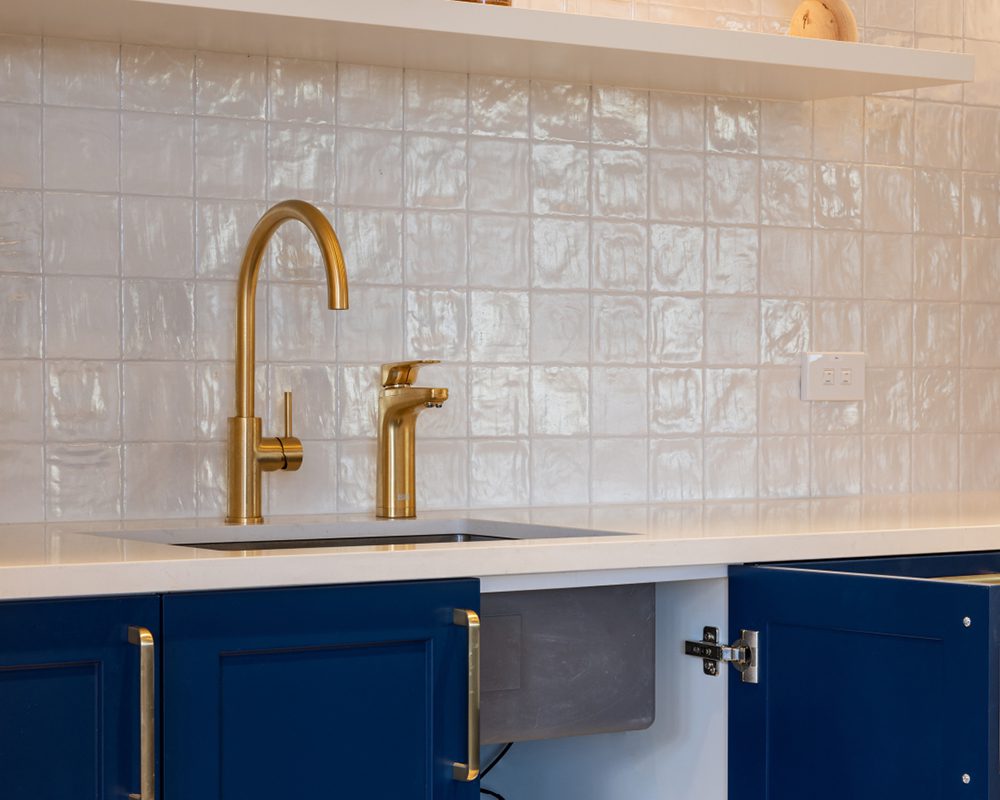
The pursuit of a sustainable built environment is a journey driven by uncompromising vision, unwavering commitment and bold action. Yet, the milestones along the way are not marked by lofty ideals alone – they’re punctuated by the tangible reality of numbers, documents and meticulously measured metrics. This is especially true when navigating the complexities of sustainability certifications and ratings – but the sheer volume of data associated with specified materials and products can feel particularly overwhelming.
And so, with the new Green Star Fitouts rating tool’s launch as a backdrop, we explore how specifiers can strategically consider product selection to achieve tangible results within the established frameworks used today and – through the lens of Billi’s Quadra and Quadra Plus systems – answer a fundamental question: why are product sustainability metrics essential in facilitating this process?
ACHIEVING CREDITS THROUGH SUSTAINABLE SPECIFICATION
Industry professionals will be familiar with the Green Star Buildings rating tool, a fundamental device on the path to Green Star certification. And now, sharing the same methodology, the Green Star Fitouts rating tool is set to roll out, evolving its Green Star Interiors counterpart and raising the bar on carbon, well-being and circularity.
The tool is set to provide a framework to achieve a rating by accumulating credits across five different categories: Circular, Responsible, Healthy, Positive and People. It will set out specific criteria to assess whether – and how well – a project is meeting the credit outcome, falling into one of the performance levels: Minimum Expectation, Credit Achievement and Exceptional Performance.
THE VALUE OF THE RESPONSIBLE PRODUCT VALUE (RPV)
Architects, designers and specifiers will need to demonstrate that the products they specify meet outlined sustainability benchmarks, and a crucial mechanism that will help them assess a product’s contribution to the credits will be the Responsible Product Value (RPV).
An RPV is calculated based on an initiative’s ability to meet criteria that sit across the Responsible, Positive, Healthy and Circular categories. Each of these carries a fixed-point value, and their sum amounts to the product’s total RPV.
HIGHER RPV, HIGHER POTENTIAL: THE QUADRA EXAMPLE
Specifying products with an RPV may contribute towards achieving the Responsible products credits and Billi’s Quadra and Quadra Plus systems – with an RPV of 16 – are an excellent showcase of that methodology. Their RPV score is based on their Global GreenTag product-specific EPDs – worth five points – and their Global GreenTag LCARate Gold certification – which is worth 11 points.
THE GREEN STAR RESPONSIBLE PRODUCTS FRAMEWORK
While the Fitouts tool is yet to be rolled out, the mechanism for assessing products against these categories is already well-established in the Green Star Buildings tool, providing a framework outlining how a product’s metrics can translate into tangible outcomes and ratings.
Quadra and Quadra Plus can contribute to achieving the Responsible Products credits in Green Star. In the Green Star Buildings rating tool, the RPV of 16 allows them to contribute to achieving credits in the Responsible Systems category, placing them in the Exceptional Performance tier with a required minimum RPV of 11 at a product level.
THE ALL-ELECTRIC BENEFITS
As all-electric units, the Quadra and Quadra Plus systems can also help pursue goals related to fully electric and fossil-fuel-free outcomes, which might require the project to use electricity to power heating and cooling, domestic hot water and cooking.
HEALTHY, LOW-TOXIN MATERIALS
Both systems contain no VOCs or BPA and are Watermark and WELL-certified. In addition, the Gold Level certification under Global GreenTag standards, along with the maximum score for Health & Toxicity the products achieve, further highlights the system’s potential to help support obtaining relevant outcomes within existing frameworks.
WATER EFFICIENCY
In addition, Quadra and Quadra Plus systems’ WELs ratings and flow rates – ranging from 5 stars and 5 litres per minute to 6 stars and 4.5 litres per minute, depending on the chosen dispenser option – can help industry professionals meet relevant criteria for water efficiency.
SUPPORTING OCCUPANT WELLNESS
Beyond direct credit contributions, the Quadra and Quadra Plus support the goals of a healthy indoor environment. Their ergonomic design enhances usability, while the silent, water-cooled operation contributes positively to acoustic comfort. And by not requiring cabinet ventilation, they also prevent unwanted heat from impacting thermal comfort in occupied spaces.
EPD AND THE UPFRONT CARBON REDUCTION
Plus, Quadra and Quadra Plus’ product-specific EPDs equip architects, designers and specifiers with a crucial metric they require to meet the upfront carbon reduction criteria – the Upfront Reduced Carbon unit, which is 167kgC02e/Unit for Modules A1-A3 (cradle to gate).
To achieve the credit under Minimum Expectations, the upfront carbon emissions will have to be at least 10% less than those of a reference fitout, for Credit Achievement – 20%, and for Exceptional Performance, the fitout’s upfront carbon emissions will have to be at least 40% less than those of a reference fitout.
Any project seeking a rating under the Green Star Buildings framework will have to reduce its upfront carbon by a minimum of 10% for Minimum Expectation, while any project seeking higher ratings will require a reduction of 30% to achieve the Credit Achievement. Billi’s product-specific EPD provides the exact third-party verified data required to make this calculation.
“It’s essential for industry professionals to collaborate with suppliers to identify opportunities to reduce the project’s carbon footprint throughout the entire supply chain,” says Fergus Tough, Billi’s Director of Manufacturing Operations.
THE COLLECTIVE NEED FOR A SUSTAINABILITY STEP-UP
There is no doubt that architects, designers and specifiers can leverage the potential of sustainable products with robust sustainability metrics – like Quadra and Quadra Plus – to unlock an effective pathway to relevant ratings and a greener built environment overall. And with the new Green Star Fitouts rating tool being rolled out, the navigational toolbox industry professionals have at their disposal is getting increasingly more nuanced and demanding.
“Based on the Green Star Building system rollout in 2022, and the Green Star Fitouts in 2025, with planned stricter requirements in the coming years, we see that the supplier side of the equation will be called to accountability as well,” says Fergus. “This system calls for prior consideration of the end-user’s well-being and better monitoring from cradle to grave of our product lifecycle. This changes the perspective to a much more holistic one and will drive faster improvement in fitout design for the industry.”
Based on the fact that the Quadra system’s cradle-to-grave number is 175.98 kg CO2 Eq (Carbon Dioxide Equivalent) – about 35% lower than the industry average for worst case product (271.7 kg CO2 Eq) – Billi is certainly well equipped to lead the way.
STRENGTHENING “AHEAD OF THE MARKET” COMPLIANCE
Sitting in the top 35% of Global GreenTag internal rankings with “ahead of the market” compliance, both Quadra and Quadra Plus set an example for highly considered product development. But how is Billi planning to strengthen its leadership position in metric-driven sustainable hydration solutions and in Green Star Fitout compliance?
“We have recently launched with BIMSTORE to keep our digital drawing and 3D files accessible and up to date, and we provide ongoing information to third-party industry websites like Architecture & Design to improve product navigation and search,” says Christy Minutoli, Billi’s Marketing Manager ANZ. “We’re also about to release Billi’s first sustainability report and are ramping up our ongoing collaboration with Global GreenTag and the broader architecture and design industry, with a few exciting initiatives currently underway.”
Billi is also transitioning older units to R290 gas. “That means we’ll be adding a few more options to our sustainable products range – and expanding options for Green Star applicants in buildings or specification design.”
Ultimately, the journey towards achieving Green Star certifications and fostering a more sustainable built environment is intrinsically linked to robust sustainability metrics. And as Green Star tools continue to evolve and demand more from manufacturers, products like Quadra and Quadra Plus – with their independently verified metrics, impressive RPV and the company’s plans to expand their sustainable product range – serve as prime examples of how manufacturers can empower architects, designers, and specifiers to make sustainable product choices and confidently navigate the path to achieving their Green Star aspirations.
SUSTA I N A B I L I T Y AWA R D S 2 0 2 5
S U S TA I N A B I L I T Y eBOOK 2025
BRANKO MILETIC, EDITOR
[dearpdf id=”256736″ ][/dearpdf]
Launched in 2006, Billi’s Quadra system revolutionised underbench drinking water systems with energy reclaim technology and user-first design. Nearly two decades on, Quadra continues to set the benchmark for efficiency, sustainability and design innovation in residential and commercial water systems.in residential and commercial water systems.
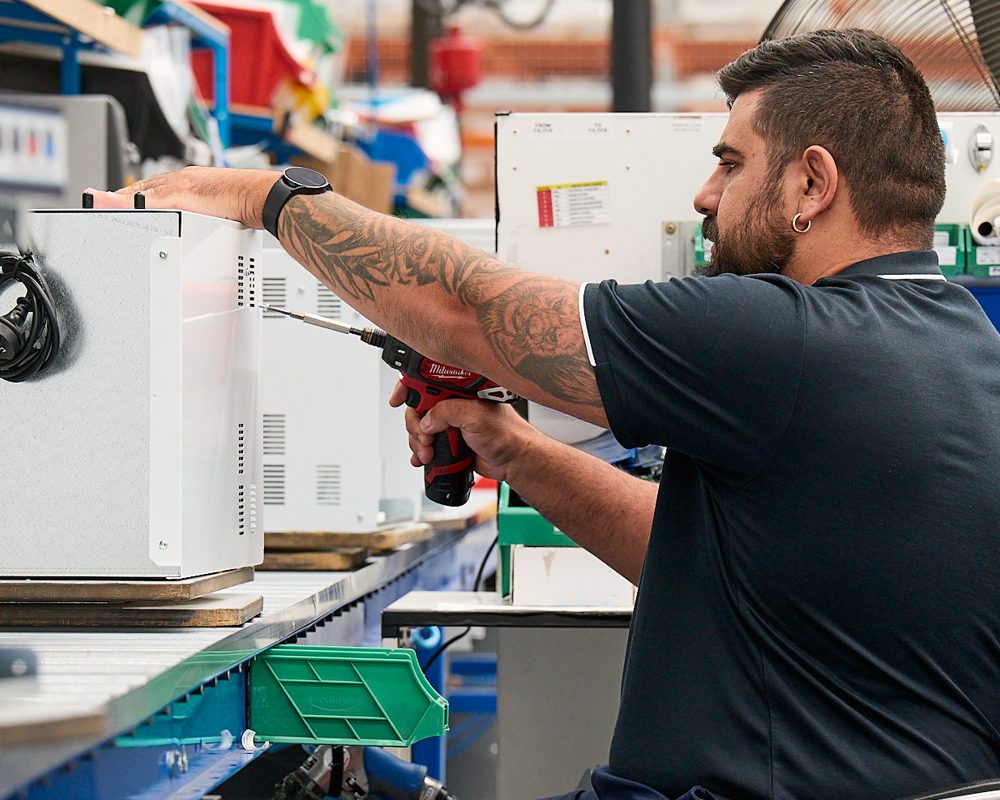
When Billi launched in 1989, the small, Aussie-grown company was bursting into an establishing water filtration market with some pretty groundbreaking ideas on how to galvanise the industry. And they accomplished this ambitious vision by introducing Australia to the first underbench boiling and chilled drinking water system only a few years later. This pioneering launch laid the groundwork for Billi’s future prominence in the market, setting in motion years of innovation and exciting technological and product releases.
One of them was the landmark launch of Billi’s signature Quadra underbench water system in 2006. Pioneering a unique heat energy reclaim system that significantly enhances energy efficiency, at the time of launch, the Quadra range solidified Billi’s reputation as an innovative, environmentally-driven disruptor in the water systems space. And now, almost 20 years on, we take a closer look at the Quadra range to uncover the innovation behind this revolutionary system, understand how it’s maintained its unwavering relevance over the years, and explore the design philosophy that brought it to life in the first place.
THE END USER
“The end user has always been at the heart of our design philosophy,” says David Craggs, Billi’s Head of Research & Development.
“From the meticulous design of our hot water safety labels and the addition of a digital user interface to expanding user controls for temperature settings, perfecting the spout splash dynamics and dispenser design – we’re constantly improving our product design to enhance user experience.”
It’s evident that the very same, user-driven ethos informed Quadra’s mid-2000s launch. While there was quite a lot of innovation happening in the water system space at the time, Quadra introduced some particularly inventive features that directly addressed shifting consumer needs and evolving requirements of the built environment.
In essence, Quadra’s innovative heat energy reclaim system captures and reuses the energy produced during the chilling cycle to preheat the boiling water, leading to significant energy savings and improved efficiency. In addition, Quadra introduced water-cooled technology, which is generally considered more energy-efficient and does not require cupboard ventilation or a cooling fan, making installation easier, preventing the release of exhaust heat into surrounding cabinetry and ensuring much quieter operation.
This noise-reduced, efficient and space-saving underbench design made it easier to integrate into various residential and commercial environments, offering architects and designers at the time a unique opportunity to specify water systems in applications that weren’t an option before.
With such an outstanding fusion of performance, convenience, improved efficiency and energy savings, no wonder that the ripples of Quadra’s momentous launch still influence the water systems landscape to this day.
QUADRA’S ENDURING RELEVANCE
Since the launch, the range has expanded its product family, and now comprises Quadra, Quadra Plus and Quadra Twin Plus. The Quadra provides instant boiling and chilled filtered water, while the Quadra Plus adds a separate sink mixer tap with its own hot and cold-water supply. The Quadra Twin Plus provides boiling and chilled water and features two separate sink mixer taps with hot and cold water.
Designed to work in commercial and residential spaces, the systems boast a selection of refined dispenser options, including XT Touch, XR Remote, XL Levered and the award-winning Multifunction Mixer Tap, launched in 2024 and recognised with a Good Design Award, complemented by a range of versatile contemporary finishes from classic matte white to urban brass and gunmetal grey. In addition, the XL Levered option is available with red and blue coloured levers and braille pads to support vision-impaired users.
This design versatility is also reflected in the varying capacity of each system, showcasing Billi’s commitment to meeting customer needs and ensuring the best possible experience. Specifiers can select an appropriate system depending on the number of users it’s meant to cater to, hourly delivery of boiling or chilled water cups, and a total current draw needed to accommodate the desired operation. Even the temperature of the chilled water can be adjusted between 6°C and 15°C to accommodate individual user preferences. Billi also offers custom service plan options to ensure continuous safe drinking water onsite – with periodic plans available for locations with multiple units, the company provides a bespoke management system for every customer’s needs.
Alongside versatile choice, outstanding quality and excellent functionality – backed by a two-year warranty – Quadra’s environmental profile continues to be the cornerstone of its unwavering relevance. And essential to its sustainability performance is the natural gas refrigerant (R290) – with a negligible global warming potential (GWP), it plays a critical role in the system’s efficiency.
“R290 exhibits exceptional thermodynamic characteristics, enhancing heat transfer efficiency and expediting cooling processes,” explains Fergus Tough, Billi’s Director of Manufacturing Operations. “As a result, R290-powered systems generally demand less energy for temperature control, reducing both energy usage and utility expenses.”
From a health, safety and well-being perspective, the products contain no VOCs or BPAs and Quadra filters are manufactured with bacteria- and biofilm-resistant materials for improved water safety and quality. Plus, both the “red for no, green for go” smart locking technology with visual safety and fault indicators and the clever Splash Free™ technology underscore the systems’ user-centric character.
A WATER-TIGHT SHIP: RELIABILITY, CERTIFIED
It’s very clear that this holistic design continues to be as relevant as when Quadra first launched, and an array of essential sustainability certifications underscores this enduring character.
Billi is a cornerstone member of the International WELL Building Institute (IWBI), and both Quadra and Quadra Plus are Watermark-certified, have Environmental Product Declarations (EPDs) and are certified Gold Level under Global GreenTag standards. This certification not only reflects their commitment to sustainability across the full lifecycle of the product – including energy and water efficiency, reduced environmental impact, low-VOC emissions, healthy indoor environments, ethical manufacturing practices, and responsible sourcing of materials – but also recognises the maximum score the products achieve for Health & Toxicity, further highlighting their potential to support relevant outcomes within existing frameworks.
For architects and designers striving for sustainable building certifications like Green Star, specifying products with recognised ecolabels provides valuable documentation and contributes towards achieving their project goals. For instance, specifying Quadra and Quadra Plus can contribute to achieving the Responsible Products credits in Green Star. In the Green Star Buildings rating tool, the RPV of 16 allows them to contribute to achieving credits in the Responsible Systems category, placing them in the Exceptional Performance tier with a required minimum RPV of 11 at the product level.
This potential to help architects and designers achieve their sustainability aspirations is underscored by Global GreenTag’s assessment of Quadra ranges’ compliance as “ahead of the market,” positioning them in the top 35% of Global GreenTag’s internal ranking.
STAYING AHEAD OF THE MARKET, LOCALLY AND GLOBALLY
With the “ahead of the market” Global GreenTag compliance under Quadra and Quadra Plus’ belt, Billi, which has just started its global expansion, is looking at a much more complex market of international regulations to adhere to.
“It adds another layer of complexity when we look at sustainability as a manufacturer,” says Royce Tan, the company’s Brand Marketing Coordinator. “It highlights the ‘duty of care’ and our own global impact as an international conglomerate.” With such a strong commitment to industry-wide collaboration, a data-driven approach to innovation and a constant push to advance sustainability ambitions locally and abroad, what’s next for Billi and for the Quadra systems?
“The latest units are based on the consistent success of an all-in-one underbench water filtration solution, like our flagship model, the Quadra,” David says, explaining that the last iteration of the Quadra range, Quadra Sparkling, has now evolved into the OmniOne. “We’ve improved the touchscreen interface in OmniOne, introducing better customisation controls and even safety mitigations in the unit,” he continues. “Now, the new XT Motion will combine the convenience of buttons with motion-sensor controls for all functions on the sides, back and top to enable more convenient, inclusive and hands-free operation, supporting disability access and helping ensure infection control.”
As Billi’s intuitive refinements continue to improve the user experience over the coming years, another challenge lies ahead, and the company is facing it with readiness, curiosity and optimism. “We are approaching the energy efficiency limit of unit design,” explains David. “That’s because it’s impossible to increase the capacity without increasing energy use
or altering the size of the system. So, for us, this will be the most exciting challenge, once we’ve exhausted the limits of conventional appliance design
Based on the Quadra system’s trajectory to date, it’s safe to assume that Billi is most certainly going to rise to the challenge, and we can expect continued market-defying innovations.
Sustainability E-Book 2025
BRANKO MILETIC, EDITOR
Architecture & Design Australia
[dearpdf id=”256736″ ][/dearpdf]