
Billi Australia announced today the release of its new Digital BIM/CAD Library, providing free access to high-quality 3D and CAD files for the company’s most popular filtered-water systems. The files are available to download immediately from the Billi website and the Bimstore platform.
The library includes native Revit 2021+ RVT and AutoCAD DWG models covering all the product setup variations. Each file is configured for quick, accurate placement in project drawings and is supplied without paywalls.
Our goal is simple: make specifications faster and more reliable for every project team. By offering ready-to-use digital models with embedded key product data, we eliminate hours of re-drawing and document-hunting from the design process.
Key features
– Native formats – Revit 2021+ RVT and AutoCAD DWG files
– Integrated sustainability data – flow rates, power requirements and Environmental Product Declaration (EPD) tags included
– Zero cost – open download, no license fees
– Automatic updates – future revisions sync through Bimstore embeds
Architects, interior designers, specifiers, and engineers can now access accurate product geometry and performance information from the start. By standardizing the data within each model, Billi aims to help project teams reduce RFIs, accelerate client approvals and align more easily with sustainability benchmarks.
Accessing the files
The Digital Design Library can be reached via the BIM Landing Page on the Billi website or directly through Bimstore.
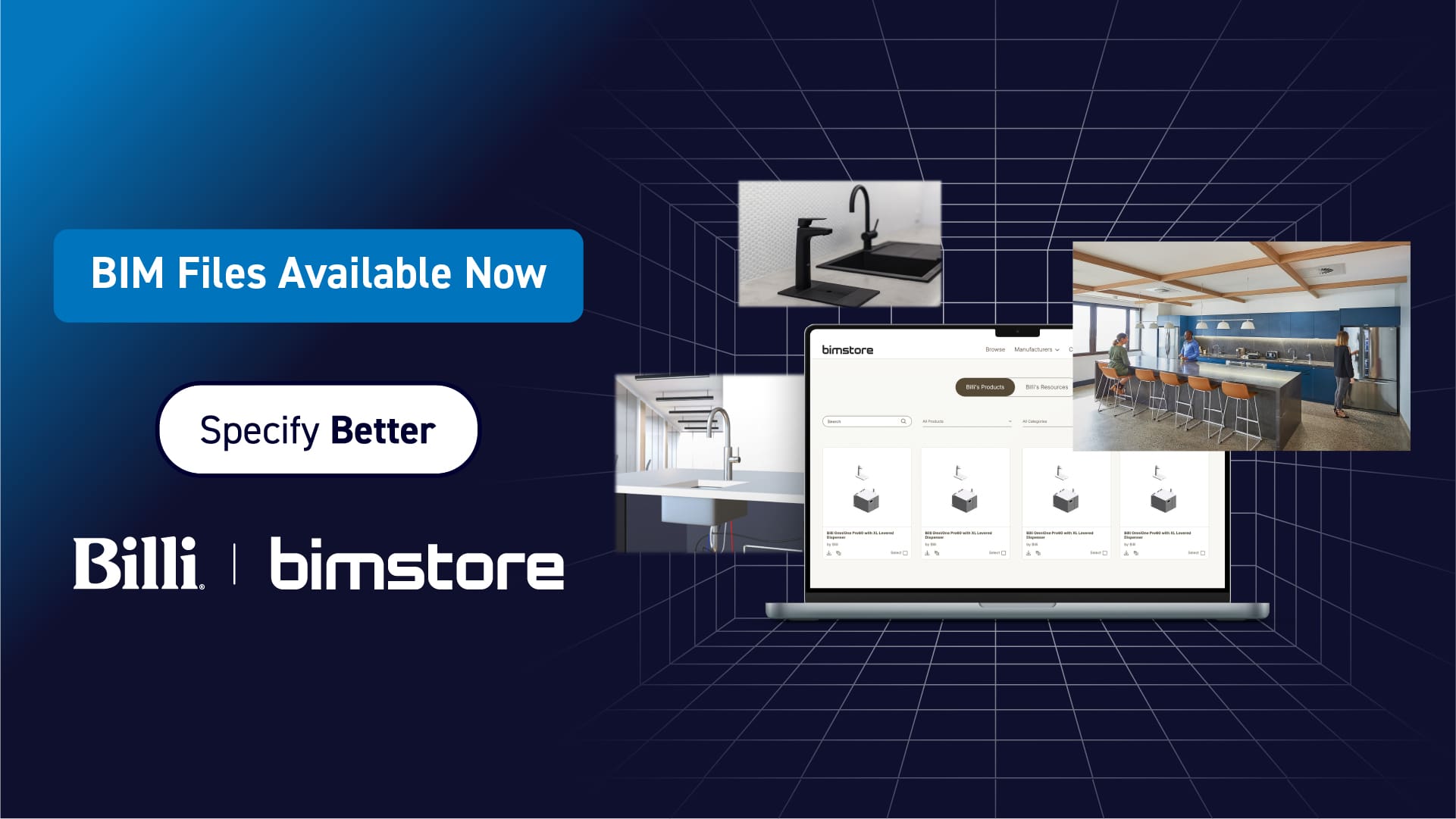
For professionals who prefer a guided tour, Billi is offering complimentary 10-minute screen-share demonstrations; bookings can be arranged through the contact link below. BOOK DEMO
Billi is once again a sponsor of Architecture & Designs Sustainability Awards, proudly supporting the inaugural Single Dwelling (New) category. This category recognises the smart design and construction of single-residential buildings, that prioritise sustainability and innovation within a small footprint. By rewarding sustainable design principles, we can create buildings that are ergonomic, energy-efficient, environmentally friendly, and enhance the quality of life for occupants.
Billi’s Commitment to Sustainability
The sponsorship is aligned with our product solutions for smaller dwellings committed to contributing to a more sustainable future. Our efforts include:
- Global GreenTag Certification: Ensuring our products meet rigorous environmental standards.
- Natural Gas Refrigerant (R290): Minimizing our environmental impact.
Join Us at the Sustainability Awards
The 2024 Sustainability Awards Gala will be held in Sydney on November 14, 2024. Don’t miss this opportunity to celebrate excellence in sustainable design.
Learn More:
Visit the Sustainability Awards website: Join us on Thursday November 14, in person at the Fullerton Hotel at No.1 Martin Place, Sydney, or online from across Australia, to walk away with the newest knowledge, up to 10 CPD points and practical steps to help you increase your sustainability outcomes across your projects and practice.
Let’s work together to create a more sustainable future.

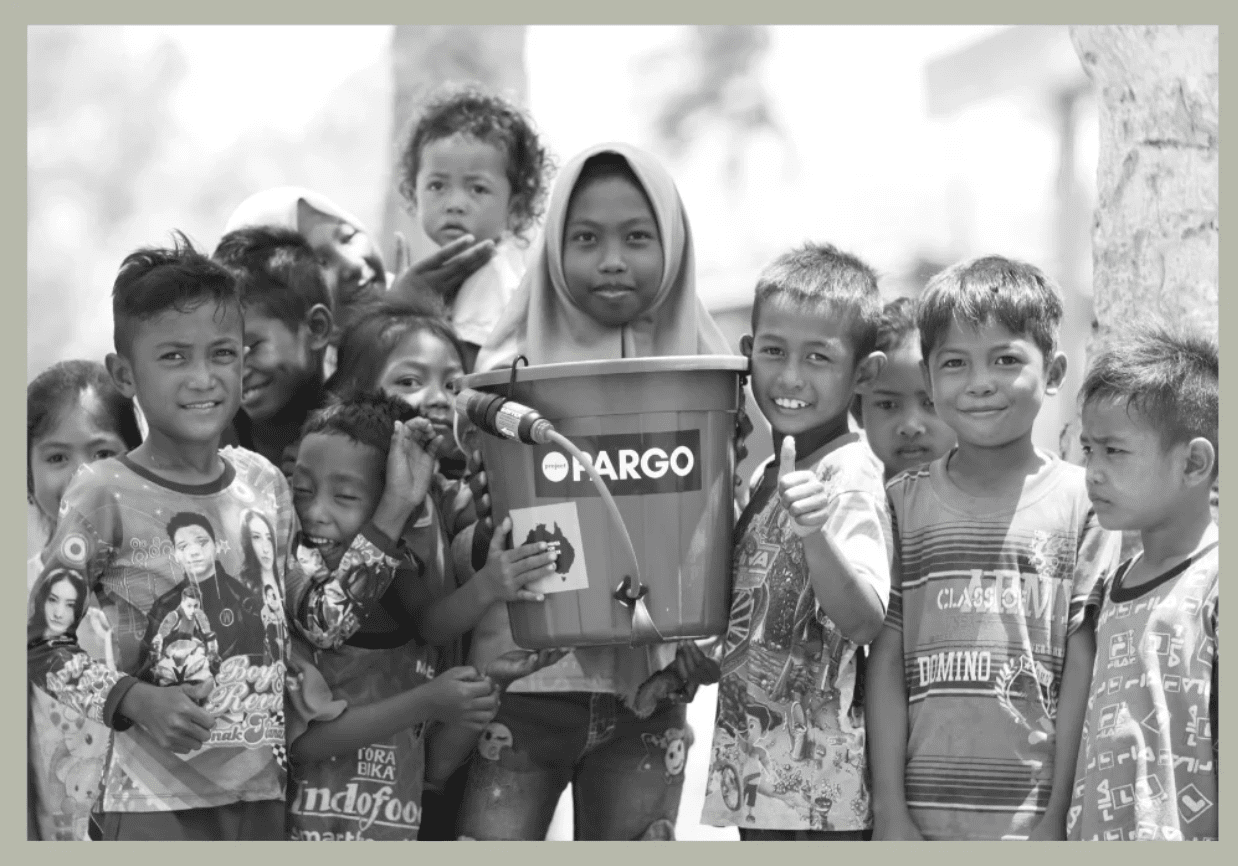
We are big admirers of the critical work done by Project PARGO; and we support their awe-inspiring impact on rural or vulnerable global communities. Their dedication to providing clean water, health education, and sustainable solutions is awe-inspiring.
That’s why Billi has chosen to ethically source our new insulated bottles from Project PARGO, to support their ongoing impact of international initiatives. Our shared commitment to sustainability and social responsibility drives this new collaboration. As our planet evolves, so too must our approach to managing the environmental impact. Together with Project PARGO, Billi aims to make a tangible difference, by choosing our products, you’re not only getting a high-quality, tested insulated bottle, but you’re also supporting a cause that matters. We’re proud to offer a cruelty-free alternative to those sourced from ethically questionable sweatshops.
Clean Water Access: A Global Crisis
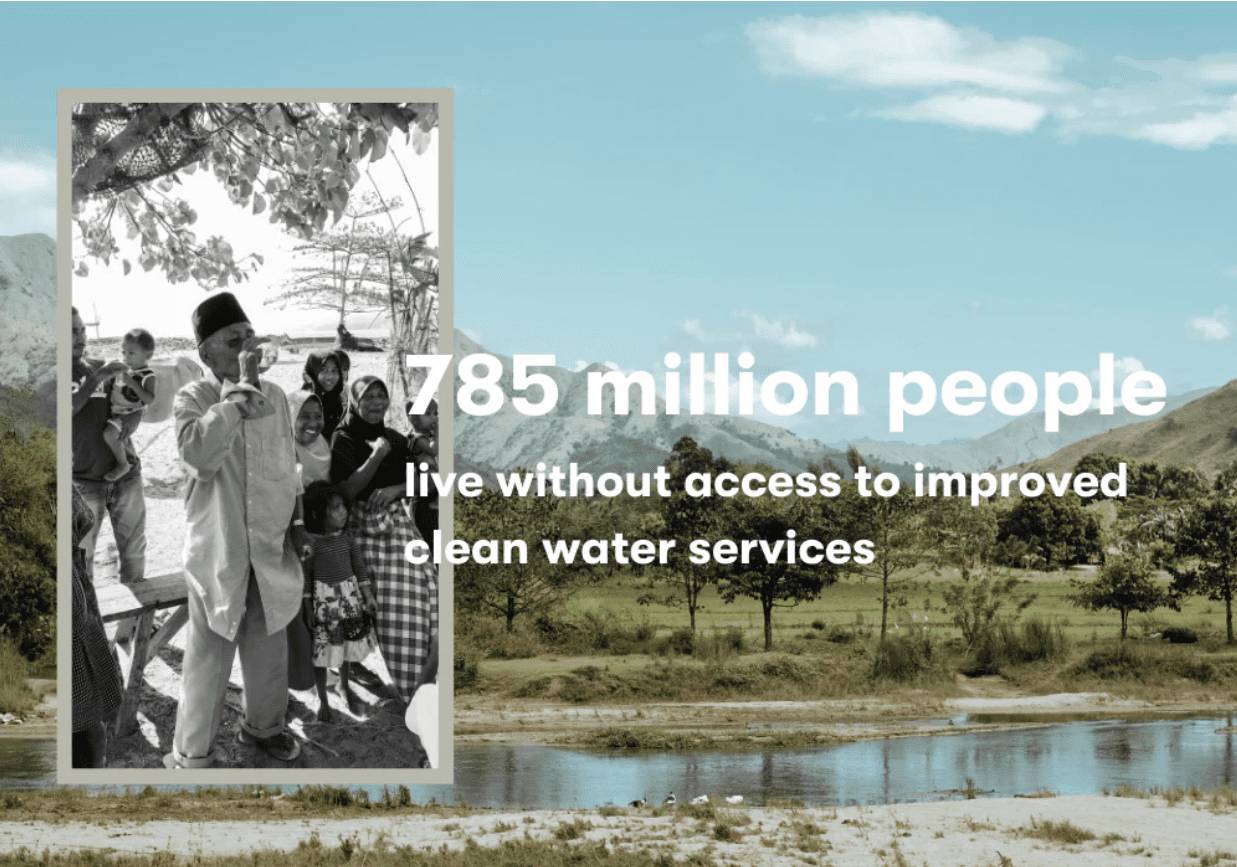
Over 785 million people worldwide lack access to clean drinking water (*The Guardian 2017). This means they rely on contaminated sources like wells, springs, and even surface water. This can lead to serious health problems, including diarrhea, malaria, and cholera.
The Danger of Dirty Water
Contaminated water has devastating consequences. It can cause death, especially among children, and hinders economic development. Women and girls are often burdened with the task of collecting water, limiting their opportunities for education and work.
The Power of Clean Water
Access to clean water and sanitation has a ripple effect on communities. It improves health, reduces poverty, and empowers women and girls.
The Need for Action
While progress has been made so far, there is still much to be done. We made a conscious decision to ensure that everyone, including future generations, has access to clean water and sanitation.
Have a look at PARGO’s latest Clean Water Projects to see the positive impact for yourself. Get involved by purchasing your own Billi-branded insulated cup or bottle. Your cuppa can make a world of difference to someone! a percentage of each purchase directly contributes to clean water initiatives across the globe.
Edited by Royce Tan
#Billiwater #projectPARGO #CleanWater #ThirstyForChange #Sustainability
Research References:
projectpargo.com/blogs/project-pargo/clean-water-crisis
by Dylan Rowe
The Guardian
www.theguardian.com//2017/access-to-drinking-water-world
World Health Organisation
www.who.int/water_sanitation_health/diseases-risks/
www.who.int//fact-sheets/drinking-water
United Nations Sustainable Development
www.un.org/sustainabledevelopment/water-and-sanitation/
The tapware industry is becoming a key driver of water efficiency, sustainability, and carbon neutrality, with innovations that reduce water usage while maintaining performance. Aligning with certifications like GreenTag and the WELL Building Standard, these solutions promote water quality, hygiene, and material safety, enabling architects to create healthier, resource-efficient buildings.
Tap Into Tomorrow: Blueprint for a Water-wise, Carbon-neutral Built Environment explores the intersection of innovation and sustainability in tapware. This whitepaper explores how modern smart taps are at the forefront of water efficiency, carbon neutrality, certification and user-led design. For architects and designers, integrating these new tapware solutions is essential for creating high-performing buildings that meet evolving environmental standards and client expectations.
From the global leader in instantly filtered boiling, chilled and sparkling water systems, Billi’s Multifunction Mixer Tap aligns with broader sustainability and efficiency goals, offering a 5-star WELS rating and energy-saving features. Engineered through extensive research, the tap optimises water flow with a redesigned aerator and tap body manifold, while its touch-sensitive UI enhances user control and supports real-time water monitoring. By integrating multiple functions into a single fixture, the tap also promotes space-saving solutions for both residential and commercial applications.
Billi’s Multifunction Mixer Tap not only meets sustainability goals but also sets a new standard in engineering quality and user experience. Previous tapware solutions often required two separate fixtures or relied on off-the-shelf components that lacked design flexibility. The Multifunction Mixer Tap addresses these challenges with a refined engineering approach that resulted in a high tap body with 260mm of clearance, offering greater functionality in compact spaces. The slimmer, continuous arc from spout to outlet provides a sleek, modern aesthetic while optimising water flow. This innovation came after nearly 11 months of focused development, during which the aerator tip, tap body manifold, and spout were redesigned to create a more efficient, space-saving solution that remains fully retrofittable with existing Billi under-bench systems.
Flow meets function: When Billi’s Multifunction Mixer Tap flows into your kitchen and living space, it provides complete control over safety, space-saving, sanitation, and cooking needs for any household. The tap’s aesthetic appeal, combined with energy-efficient manufacturing and smart water management, aligns with what we are seeing in the taps of the future: water efficiency, carbon neutrality, and certification through user-led design. By leveraging data-driven insights, Billi continues to innovate in ways that support resource-efficient buildings and provide architects and specifiers with sustainable, high-performance tapware solutions
Download this whitepaper to explore the intersection of innovation and sustainability in tapware design.
[dearpdf id=”199739″ ][/dearpdf]
Fergus Tough’s journey at Billi is marked by engineering excellence and environmental stewardship. He is driven by a deep passion and unwavering purpose to bring about meaningful change. In this discussion, Fergus explores Billi’s proactive sustainability approach and discusses how data-driven insights, early adoption of green technologies, and a company-wide commitment to change are shaping a brighter future.
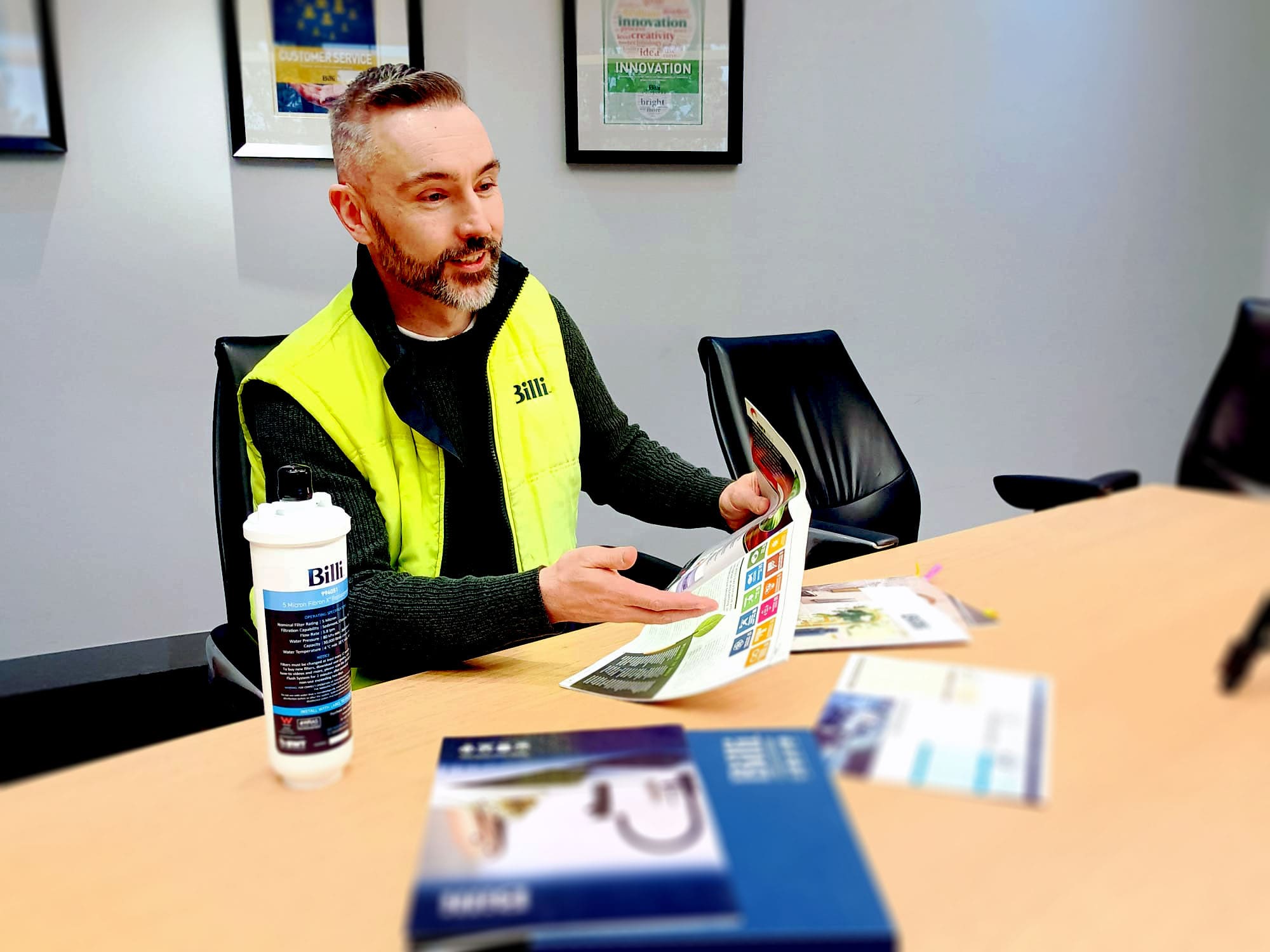
How long have you worked at Billi, and what drew you to the company?
I’ve been with Billi for six years now. When I first joined as a Senior Manufacturing Engineer, I was attracted by the opportunity to make a positive impact. Billi’s commitment to innovation and its forward-thinking culture was a perfect fit for me. On a personal level, I have always tried to do what I can to minimise my impact on the environment. Billi is the first company I have worked at that has incorporated sustainability as part of the company ethos.
And what does your current role at Billi entail?
As Director of Manufacturing Operations, I oversee a wide range of departments, including Production, Quality, and Supply Chain. About 18 months ago, I also took on the role of Billi’s ESG program manager, responsible for initiating our ESG reporting.
Setting up a robust ESG program from scratch must have been a challenge. How did you approach it, especially considering Billi’s acquisition by Strix in late 2022?
The support from our parent company, Strix, was crucial. While Billi had a history of environmental initiatives, Strix provided the structure and expertise to enhance our efforts. I closely collaborated with Matt Thomas, the Engineering and Divisional Operations Director at Strix, and his guidance was essential in helping me navigate the complexities of ESG reporting.
Sustainability has always been a personal passion, and this role allowed me to formalize my knowledge. It was interesting to see how my work and personal life aligned – learning about solar panels and green energy at work while implementing them at home! This hands-on experience, along with Matt’s insights, helped me understand the complexities and translate them into actionable steps for Billi. The open communication and collaborative spirit fostered by Strix and Matt have been crucial to our progress, including our shift towards data-led decision-making.
And how did this shift inform Billi’s sustainability agenda?
In 2023, Billi established the framework for its Environmental, Social, and Governance (ESG) initiatives and embraced a data-driven sustainability approach. Aligned with the United Nations’ Sustainable Development Goals (SDGs), Billi’s approach concentrates on seven key goals within “the 3Ps”: People, Product, and Place. Collaborations with esteemed organizations such as the International Well Building Institute and GreenTag, coupled with a strong emphasis on WELL certifications, recycling capabilities, and product waste energy capture, serve as a direct manifestation of our commitment to the SDGs.
At the heart of these partnerships, initiatives, and sustainability endeavors lies a data-driven decision-making process. For example, Billi’s collaboration with Custom Fleet facilitates the gathering of crucial data on fuel consumption and vehicle usage, illustrating how this data-centric approach empowers us to establish ambitious targets, monitor progress, and identify areas for enhancement.
Data clearly plays a crucial role in Billi’s sustainability strategy.
Of course! It’s crucial to have a data management system in place to avoid bias. We’ve realised the importance of data for making informed decisions and measuring progress. We’ve been consistently collecting data on different aspects of the business, like waste management and energy consumption. This enables us to set ambitious targets and track our sustainability performance more effectively.
What are Billi’s main areas of focus in 2024?
This year, we’ve achieved a significant milestone at our Thomastown manufacturing facility by transitioning to 100% renewable electricity. We accomplished this by utilizing a combination of solar energy and GreenPower-accredited Renewable Energy Certificates (RECs). Additionally, we’re offsetting the carbon emissions from our company vehicles through the use of carbon credits, ensuring that our Scopes 1 and 2 emissions are also 100% renewable. This puts us ahead of the recommendations outlined in the Paris agreement.
Looking ahead, our primary focus is on reducing Scope 3 emissions and working towards carbon neutrality. We are actively integrating sustainability into all aspects of our operations, including product development, supply chain logistics, manufacturing, partnering with local suppliers, and transitioning to recycled and biodegradable packaging solutions. It’s important to note that 94% of our Scope 3 emissions are ‘in-use’ emissions, influenced by the decarbonisation rate of electrical grids. This emphasizes the significance of our ambitious internal targets and our commitment to achieving ISO 14001 Environmental Management and ISO 45001 OH&S Management accreditations by 2024, followed by ISO 50001 Energy Management in 2025. These accreditations will drive our sustainability efforts and minimize our environmental impact as we address the complexities of Scope 3 emissions.
Our products consume water and electricity, and we are actively seeking opportunities to create value while reducing our carbon footprint. Our focus is on efficiently capturing relevant data and leveraging expertise to achieve this goal. Our technical specialists are continuously innovating to reduce our impact, such as through the early adoption of ‘green’ refrigerant gases and converting waste heat into a source of heating energy to decrease electricity consumption.
What prompted Billi to adopt these green refrigerants?
Globally, there’s a shift away from using hydrofluorocarbons (HFCs) as refrigerant gases due to their high Global Warming Potentials (GWPs). For example, R134a, which is a common hydrofluorocarbon, has a GWP of 1,430, meaning its greenhouse effect is 1,430 times more than carbon dioxide over a 100-year period. In contrast, hydrocarbons (HCs) like R290 have GWP below 5.
While there is no current legislation or requirement for us to stop using HFCs in our domestic markets, we chose to adopt HCs early on because it’s best practice and to be able provide service to some of our export markets, such as the UK and EU, where such requirements are already in force. Being proactive aligns with our environmental responsibility, and we’ve invested significantly in infrastructure and training to ensure a safe and seamless transition.
It’s clear that commitment to early adoption underpins all facets of Billi’s business.
To me, sustainability means considering the impact of our actions early on, whether it be in product design, logistics and supply, ethical sourcing or even investment. And so, it’s essential for Billi to keep sustainability front of mind during key decision-making processes. It can no longer be an afterthought, and people in senior leadership positions – like myself – have an obligation to ensure we only accept the highest level of sustainable practices.
Early adoption of HC refrigerants is one example. The refrigerant cooling cycle is a complex process with many factors to take into account early on, including the design of the product and the amount of gas used. But when the gas, design, and pressures are balanced correctly, we can achieve superior cooling performance and reduce energy consumption – and that’s what our engineers are always working on optimising.
And how does this attitude affect new product development?
We consider sustainability factors in our new product development research. We ensure that all our units undergo field testing to proactively investigate real-world conditions for any unexpected behaviors across all our product lines. This process of pre-emptive problem-solving allows us to address any potential unforeseen issues before the product reaches the customer.
Of all Billi’s sustainability initiatives, which one are you particularly excited about?
With an engineering background and keen eye for data, I’m most excited about being able to further optimise our products’ energy consumption. Billi’s under-the-bench products rely on electricity and while we already have sophisticated energy-efficient systems in place, we continue to explore new ways to optimise and improve our products.
How does fostering a culture of awareness within the company fits into Billi’s sustainability agenda?
Having that strong culture is absolutely crucial, and it all starts with strong leadership and consistent messaging, followed by the integration of sustainability into employee objectives and business goals. We also want to encourage everyone at Billi to make small but meaningful changes in their daily routines. It’s about creating habits – turning off equipment when not in use, making conscious waste disposal choices. These actions may seem insignificant but when everyone gets on board, they contribute significantly to our overall sustainability goals.
Finally, what significant sustainability shifts do you foresee in the industry in the coming years?
The momentum around sustainability is undeniable. Companies worldwide are realising they must embrace sustainability to thrive. While the industry has made great strides in the environmental space, including the use of renewable materials, there is still a long way to go.
We can expect a surge in the rise of electric vehicles and the market for them to continue growing. Improved battery technology will bring about cheaper and more reliable long-range options, leading to a significant reduction in emissions related to business travel. At Billi, we’re excited to be at the forefront of this movement, setting a high bar for environmental responsibility and inspiring others to follow suit.
KEY HIGHLIGHTS:
Fergus Tough’s leadership at Billi has been essential in driving the company’s sustainability approach and initiatives.
Thank you Fergus!
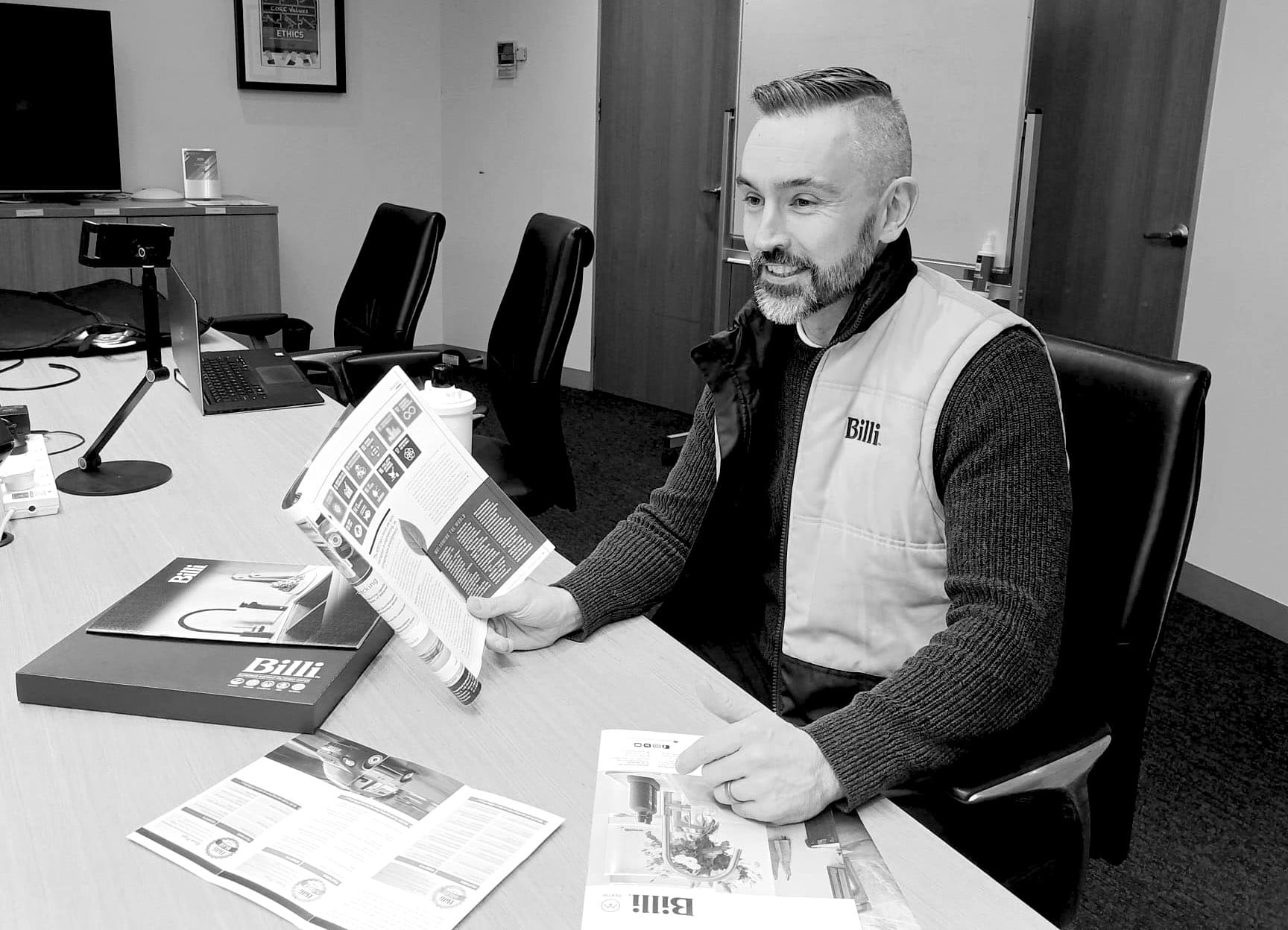
CONGRATULATIONS!
We’re proud to announce a major milestone, Billi has produced our 500,000th cartridge!
This achievement is a testament of dedication with our loyal partner BWT Australia, Europe’s largest water treatment products company.
Together we bring to you the highest quality filters using their innovative Fibron X® technology.
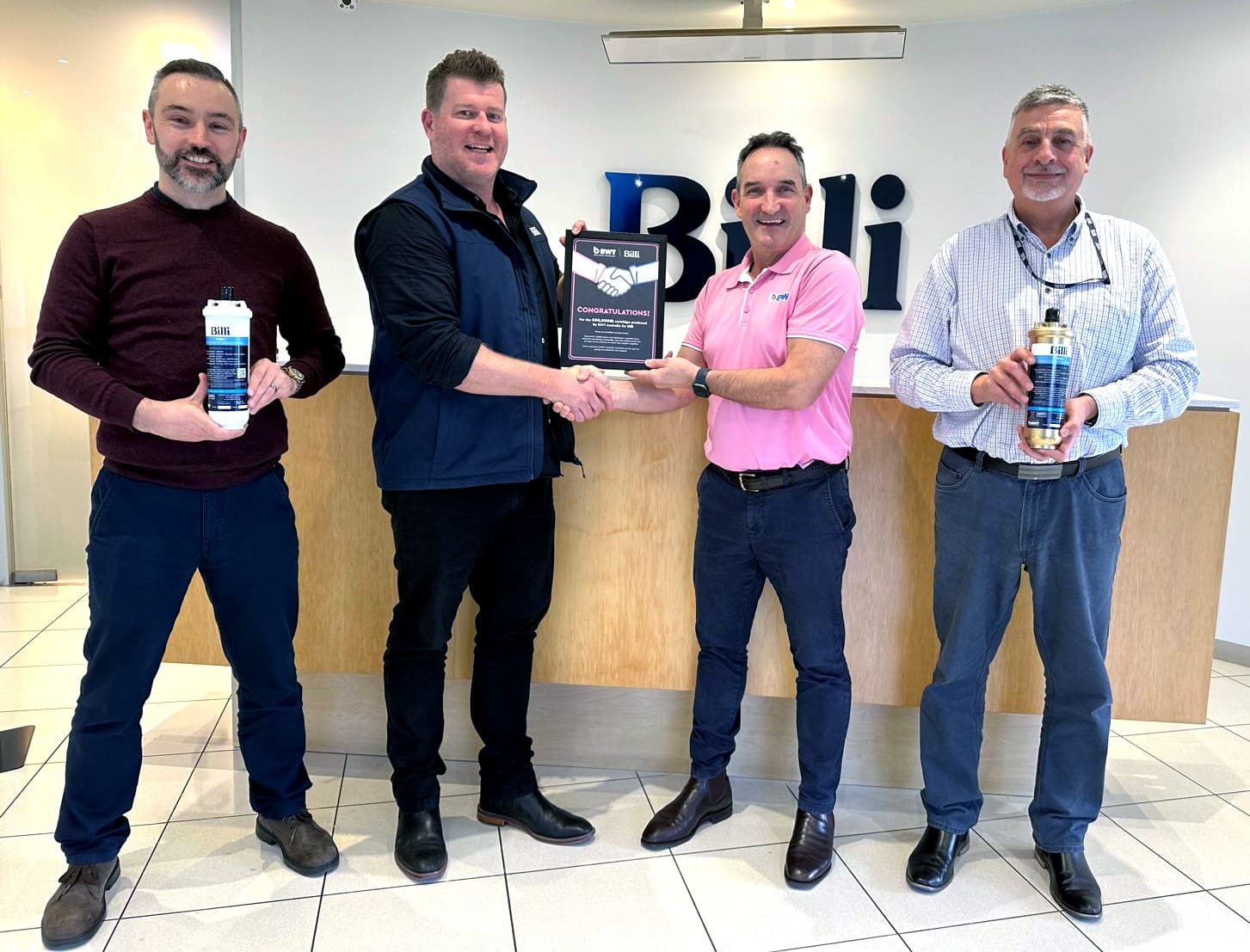
BWT Australia recently visited Billi offices to congratulate us in person, on the shared half-a-million cartridge milestone and gifted the actual unit to us.
We’re inspired by BWT’s commitment to sustainability and innovation and congratulate them too on their successful initiatives with the BWT Alpine Formula 1 team. Here’s to many more years of collaboration and success!
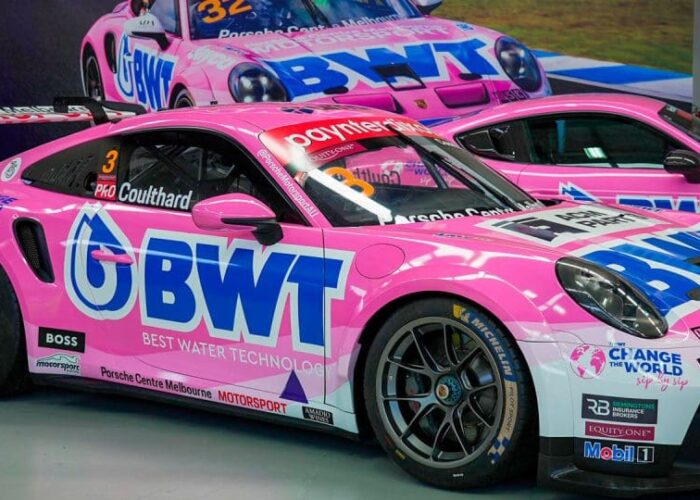
Billi’s range features BWT’s 0.2 Micron filter options that provide the highest level of filtration, removing chlorine, odour, parasitic cysts including cryptosporidium & giardia.
Trends in the Design and Manufacturing of Drinking Water Systems
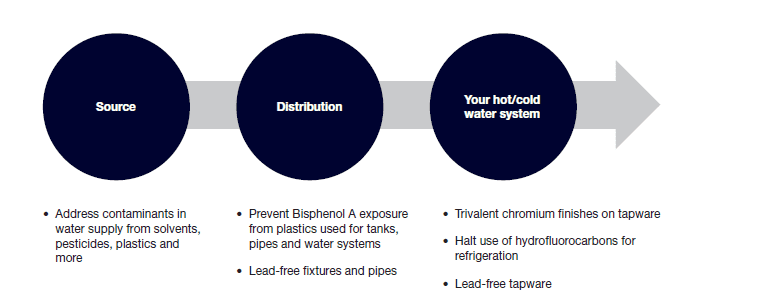
A growing body of research on environmental health has demonstrated that chemicals known or suspected to be harmful to human health are frequently found in commercially available products, including building materials. These chemicals can leak out of such products, making their way into the air or drinking water and eventually into our bodies.
In response, whether they have been forced to do so due to legislation or in an effort to be more proactive in response to emerging health trends, manufacturers are exploring changes in the materials they use to create their products. Product transparency is becoming more common as manufacturers seek to gain trust by disclosing product ingredients and health impacts.
There are a number of chemical avoidance lists that have been created that list chemicals that should be avoided in building products. In relation to drinking water systems, the health effects
of chromium, and bisphenol A (BPA) are now better understood, resulting in industry- and government-led initiatives to eliminate their use. Some substances, such as hydrofluorocarbons
(HFCs), which have been used as refrigerants, are also being phased out due to their global warming potential.
This paper examines these material trends and how they impact the design of drinking water systems. Designers are becoming more informed, demanding healthier building products, and taking the initiative to educate themselves about product certifications, including WELL, Red List and Watermark. As a result of collaboration across the industry, including with manufacturers, there are more and more products on the market that do not contain harmful chemicals.
Revisiting the “forever chemicals
A recent study revealed widespread contamination of surface and groundwater with “forever chemicals” (PFAS) globally, including Australia. These harmful chemicals are found in various products, such as firefighting foams, food packaging, carpets, and clothing. PFAS are persistent pollutants that do not break down in the environment and have been linked to serious health risks.
To address this growing concern, the Australian government is taking steps to restrict PFAS use and implement stricter regulations, with perfluorooctane sulfonic acid (PFOS) and perfluorooctanoic acid (PFOA) being among the most widely studied. This whitepaper highlights the importance of understanding the dangers of PFAS and the need for proactive measures to protect our water sources and safeguard public health.
How Billi is shaping material health outcomes
For almost three decades, Billi has led the global market with innovative tapware and instant boiling and chilled water filtration systems. Proudly Australian-made and designed, Billi products are
celebrated for their combination of functionality, performance and contemporary aesthetics.
Driven by a strong research and development team and a commitment to improving user health and quality of life, Billi supplies a range of instant boiling and chilled water dispensers that meet strict material health requirements that are continuously developing at a national and international level.
Whether it is chromium finishing, lead-free and BPA-free product design, or the use of sustainable refrigerants, Billi is always supporting current trends for sustainability and wellness, addressing the hydration needs of their users in a safe, efficient and environmentally friendly manner.
In today’s market, transparency in sustainability is a necessity for businesses across industries. Billi addresses this with independently verified and registered Environmental Product Declarations (EPD) under EN 15804.
In addition, Billi products have achieved Global Greentag certification and LCARate Gold Program recognition, providing assurance of the sustainability and fitness of their products throughout their lifecycle. Billi’s repair vs. replace ethos plus the introduction of R290 Green Gas allow Billi to be assessed under the newest version of the standard.
All Billi products are fully compliant with Watermark as well as the relevant Australian Standards and deliver extended ease of use, efficiency and a sleek contemporary aesthetic regardless of their
installation context.
Download the Architecture & Design whitepaper for the full article.
[dearpdf id=”186295″ ][/dearpdf]
Organisations are grappling with the reality that a substantial percentage of their employees may never return to the office on a full-time basis. Today’s employees’ attitudes are changing, placing greater emphasis on flexibility and relying more on employers to drive a culture of health and wellbeing.
Wellness initiatives are no longer a workplace perk; they are a necessity, offering a way for employers to encourage healthy lifestyle choices and invest in their
employees’ happiness. Considering how important water is to the functioning of the human body, one of the key strategies to improve workplace wellness is hydration.
Dehydration happens when our bodies lose more water than we take in. Although it occurs more frequently during physical activity or illness, employees in the workplace can also experience this simply by forgetting to drink enough fluids.
Promoting sustainability through hydration
In Australia, bottled water is a major contributor to landfills. Only 36% of PET plastic water bottles are recycled, which means that 373 million plastic water bottles end up as waste every year.7 Instant filtered hydration systems provide easy and convenient access to drinking water, enabling employees to reduce their consumption of bottled water products.
In addition to reducing plastic waste, hydration systems contribute to sustainable building ratings such as Green Star, the Well Building Standard and LEED. For example, the WELL Building Standard focuses on eight areas—fitness, comfort, air, water, mind, nourishment, light, and innovation—that are essential to a healthier work environment. Within this framework, the Standard promotes safe and clean water through the implementation of proper filtration techniques and regular testing in order for building occupants to receive optimal quality of water.8
When specifying hydration systems, it is important to consider the environmental, social and economic impact of your chosen products and materials over the whole product life cycle. Some systems incorporate technology to improve their energy efficiency, which may include stand-by power modes, heat-exchange technology and insulation to reduce heat loss.
Billi, your partner in workplace wellness
Proudly Australian made and designed, Billi has been at the forefront of the instant filtered boiling, chilled and sparkling water systems industry for over 30 years. The company’s in-house research and development team works side by side with our highly skilled manufacturing engineers to deliver superior instant filtered water systems locally and around the world.
Today, Billi continues to innovate and keep pace with modern techniques, contemporary interior concepts, and ever-changing lifestyle changes. And importantly, Billi products continue to incorporate improved eco-technology features.
One standout for modern workplaces is the Quadra range of filtered water dispensers. Quadra is Global GreenTag certified, which means the products pass the world’s toughest standards for health, eco performance and safety and contribute credits to a wide range of sustainable building rating tools.
Billi Quadra uses Natural Gas refrigerant (R290), which has no ozone depletion potential (ODP) and a negligible direct global warming potential (GWP). R290 has a GWP of below five, according to the Department of Climate Change, Energy, the Environment and Water. In addition, R290 exhibits exceptional thermodynamic characteristics, enhancing heat transfer efficiency and expediting cooling processes. With outstanding heat transfer capabilities, R290-powered systems demand less energy for temperature control, thus diminishing energy usage and reducing utility expenses.
The product comes with a two-year warranty, and it is Watermark certified.
Billi also offers refillable service plan options to ensure continuous drinking water onsite. With periodic plans and plans available for sites with multiple units, Billi offers a bespoke management system for any customer need.
Check out Architecture & Design whitepaper for the latest industry insights.
[dearpdf id=”167423″ ][/dearpdf]
Multi-Functional Appliances for Multi-Functional Spaces
As working, socialising, and relaxing from home become the new normal, homeowners and designers want to know how to design a multi-functional kitchen so they can adapt their space to cater for more activities. Given that the kitchen is the ‘heart of the home’ and is typically included in an open-plan layout, it is crucial to think of this area in terms of function and aesthetics.
Multi-functional appliances take on a whole new importance when you are looking to maximise space usage, efficiency and convenience in one integrated environment. Below we look at the design considerations when designing a human-centred kitchen space and specifying multi-functional appliances that are centred around modern life.
Accessibility and storage
Over designing storage for multiple single-use appliances is a common mistake. Choosing appliances with dual functions is a great way to save storage and counter space, as you only need to find room for one device rather than two.
Adding functionality to smaller spaces
A well-planned, multi-functional layout makes life simple, even when space is limited. A combination oven and microwave is a practical way to save work space, for example, without reducing cooking options. Another solution is a multi-function filtered drinking water system, which provides boiling water for cooking and hot beverages, and chilled and sparkling water for guests, while eliminating the need for space-occupying water bottles, kettles, tanks and other bulky equipment.
Increasing productivity
A permanently-installed appliance has the added benefit of eliminating the time that is wasted setting up and packing down appliances, or cleaning or setting up a space to facilitate a single task. In addition, a permanently-installed product can be used on demand at any time and does not create clutter. All these factors mean users can achieve their desired outcome quicker and easier and get back to what they were doing without wasting time.
Sustainability matters
Making efficient product choices is just one factor when planning a sustainable kitchen renovation. It is also important to consider the environmental, social and economic impact of your chosen products and materials over the whole product life cycle, from production to final disposal. Additionally, you must also consider what your chosen supplier or manufacturer is doing about reducing waste and emissions in their own operations and supply chain.
While traditional appliances are the go-to for most homeowners, the cumulative environmental impact of multiple single-function appliances can be significant in relation to energy needs, single-use plastic production and transport. For example, filling a fridge with bottled water may seem like a cost-effective solution for on-demand drinking water, but it takes up valuable fridge space and contributes to increasing consumption of single-use plastics. In Australia, we already buy billions of plastic bottles each year, with 53% of those plastic bottles ending up in landfill and 12% entering our environment.
Energy saving and affordable
It is important to conduct a life cycle assessment to consider the cost of ongoing consumables or the need to fully replace an appliance instead of maintaining or repairing. For example, a benchtop sparkling water maker or jug filter may be cost-effective upfront, but both will have high ongoing costs to replace the C02 cylinder or water filter, respectively. An underbench filtered water system that also provides sparkling water may be more expensive upfront but may be comparable in terms of running costs and provides a space-saving and dependable drinking water solution.
Why Billi is the answer for modern kitchens
Maximise space and storage Billi’s concealed multi-function filtered drinking water appliances integrate seamlessly into modern kitchens, offering up to five types of water including domestic water for the sink from a single fixture. With the smallest footprint on the market, Billi’s underbench modules save space and increase capacity for other kitchen convenience items.
Increase functionality and convenience Billi’s Home range is the ideal addition to any kitchen, giving you the convenience of instant filtered water in a range of options, including chilling and sparkling for entertaining or instant boiling water for cooking. Billi’s multifunction tapware offering tactile and contactless user interface, making it the only dual operation dispensers in
the market, with enhanced reliability and the elimination of accidental dispense.
Health and wellbeing
Billi’s water-cooled range of appliances run cooler, quieter and do not pollute the surrounding atmosphere with dust or exhaust heat. UVC filtration can be fit to all Billi products or retrofit to those already installed. UV water purification systems are compact, non-intrusive and are extremely effective at destroying illness-causing microorganisms.
Ensuring the highest level of drinking water available, Billi’s filter range is tested in accordance with NSF standards, an internationally-recognised public health and safety organisation.
Reduce energy consumption
Billi provides eco-friendly and energy-efficient water systems that offer energy-saving heating and cooling processes and time-switch modes to eliminate unnecessary power consumption.
Protect the environment
With its state-of-the-art water filtration systems, Billi sets new standards in environmental sensitivity. Billi’s patented technology
recovers and reuses energy to preheat the boiling water, thereby saving energy. Billi systems also offer unique power consumption advantages, including thermodynamic heat-exchange technology, high-performance polyethylene insulation, and standby modes to conserve power. Recyclability and eco-friendly material choices also
contribute to a low environmental impact.
In addition to providing high-quality water systems, Billi addresses the global plastic problem by offering borosilicate (glass) water bottles, double-wall insulated water bottles, and reusable keep cups to avoid disposable solutions or single-use plastic bottles. The company is also committed to sustainability across their entire operation, implementing renewable energy and waste reduction initiatives across its manufacturing plants.
Visit our product range now.>>
Continue reading the Artichecture & Design whitepaper:
[dearpdf id=”149715″ ][/dearpdf]
On November 9th, the design and architecture community gathered at the Sydney Cricket Ground to celebrate the 17th annual Sustainability Awards.
With 19 remarkable winners and 14 outstanding highly commended accolades bestowed, the evening was a remarkable celebration.
It fueled our collective inspiration, propelling us towards a brighter and more sustainable future for the built environment.
Congratulations to Pocket Passiv, a project by Anderson Architecture, for winning the Smart Building Ideas award sponsored by Billi.
For more information, visit www.sustainablebuildingawards.com.au
