
As energy costs rise and environmental concerns become more urgent, Australian offices face a unique challenge: reducing energy expenses while meeting sustainability goals. Office spaces are significant energy consumers and have an opportunity to make meaningful changes that benefit both business budgets and the planet.
For workplaces aiming to operate more sustainably, Billi Australia offers eco-friendly water filtration systems that provide reliable performance without compromising on energy efficiency. With over 30 years of expertise, Billi leads the way in instant filtered water systems, blending smart design, innovative technology, and sustainability certifications that make a measurable difference in energy use.
Need for Sustainable Office Solutions
Electricity costs are steadily increasing, placing a strain on many businesses as they strive to balance efficiency and sustainability. Most offices operate daily and have high energy demands, therefore there is a need for solutions that can lower power usage without disrupting productivity.
Moving towards sustainable practices can be both cost-effective and rewarding. By adopting energy-efficient appliances, offices not only cut costs but also make significant steps towards reducing their carbon footprint. In this pursuit, eco-friendly water systems can be an impactful area for improvement. With energy-efficient water solutions, Billi supports businesses in aligning their operations with broader environmental goals, improving business energy efficiency and meeting the growing expectation for sustainability.
Energy-Efficient Technologies for a Greener Office
For offices looking to make sustainable changes that reduce energy costs, Billi’s commercial product range offers impressive energy-saving features. Each product leverages advanced technology to optimise energy use, whether for boiling, chilled, or sparkling water. Here’s how these features & benefits work to help your business reduce energy consumption and improve sustainability:
- Eco-Intelligence Technology: This feature enables Billi systems to monitor and adapt to daily usage patterns, ensuring the system powers down during low-use periods such as evenings and weekends. This self-learning timer effectively reduces standby power consumption, meaning that energy is only used when it’s truly needed — ideal for a busy office environment where even small energy savings add up.
- Heat Exchange Technology: The OmniOne combines innovation and sustainability with its advanced heat exchange system, which reclaims energy typically lost during the chilling process to preheat boiling water. This efficient design reduces energy consumption while enhancing performance and reliability, making it ideal for both residential and commercial spaces. With an expanded exchange coil capacity, OmniOne optimises water circulation, ensuring consistent efficiency and an extended lifespan — all within a stylish, space-saving underbench unit.
- Water-Cooled Systems: Unlike traditional air-cooled systems, which often require additional ventilation, Billi’s OmniOne operates without the need for external cooling fans. This not only reduces noise but also saves energy by removing the need for additional air circulation. The water-cooled design is quiet, highly efficient, and helps keep your workspace comfortable — a major plus for open-plan offices.
These eco-friendly technologies prove that energy efficiency doesn’t have to come at the expense of performance. By choosing systems with adaptive energy use, reclaimed heat, and efficient cooling, offices can reduce their electricity bills and achieve a more sustainable operation.

Billi’s Water Systems for Cost-Effective Office Sustainability
For a workplace that values energy savings without sacrificing quality, Billi’s water systems are a natural fit. Here’s a closer look at the options available:
- Quadra range: Billi’s Quadra range delivers boiling and chilled (and optionally; sparkling water), with features like heat exchange technology and Eco-Intelligence tailored for medium to large offices. With a compact, under-bench design, the Quadra systems allow businesses to make the most of limited space while maintaining high levels of energy efficiency. These units are an ideal solution for businesses committed to reducing energy costs without compromising on the quality of their drinking water.
- OmniOne: The OmniOne provides a multifunctional system, offering boiling, chilled, and sparkling water with the added option of hot water for sinks. This flexible design is ideal for office kitchens, allowing a single appliance to serve multiple functions and eliminating the need for a separate hot water service. Its water-cooled technology also ensures that your energy use remains low, and it doesn’t require additional ventilation, making it an easy-to-install, energy-efficient solution.
Note: The Quadra range also earned GreenTag and IWBI certifications, recognising the sustainable performance and aligning with workplace health and safety standards. These certifications are important for businesses that wish to enhance their ESG (Environmental, Social, and Governance) credentials, providing reassurance that Billi products meet rigorous environmental benchmarks.
For long-term performance and reliability, Billi also offers Billicare service plans. Each plan includes regular maintenance, filter changes, and support from accredited technicians. These plans allow businesses to ensure that their water systems remain efficient and environmentally friendly without the hassle of constant oversight.
Make a Lasting Change with Billi
By choosing Billi’s systems, businesses can reduce energy expenses, improve their environmental impact, and provide employees with high-quality drinking water. With flexible service plans, ongoing support, and a commitment to sustainability, Billi is a trusted partner for many businesses in helping them operate responsibly. Read our case studies for examples.
If your office is ready to embrace sustainable water solutions, contact the team or use our 3D Build application to find a system that fits your business needs. Together, let’s create an office that’s both energy-efficient and environmentally responsible.

With energy prices rising and climate concerns front of mind, many Australians are looking to reduce their power bills and environmental footprint. Thankfully, you don’t need to overhaul your life to make a significant difference in energy use. Simple changes at home and work can lead to big savings on both energy and costs.
For over 30 years, Billi Australia has been a leader in eco-friendly, energy-efficient water systems, providing boiling, chilled, and sparkling water solutions that fit seamlessly under your kitchen sink. Our innovative technologies, like heat exchange, make reducing energy easy. Below are 10 actionable tips to help you cut electricity use, starting with insights from Billi’s energy-efficient solutions.
1. Optimise Appliance Usage with Smart Technology
Appliances that operate only when needed are very helpful for energy efficiency, especially in a busy household or workspace. Smart technologies like Billi’s eco-intelligence (plus other features & benefits) make this effortless. This self-learning timer adapts to daily patterns, ensuring your system is active during peak usage but conserves energy when it’s not. Over time, this automated control can cut down on wasted power, letting your appliance only operate when required.
Tip: Adopt this technology to other household devices. Use programmable thermostats and set timers on water heaters to limit energy waste. Even small changes, like turning off standby power, can make a difference.
2. Save Energy with Heat Exchange Technology
Heat loss is a common culprit in wasted energy, but systems that capture and repurpose heat can make a big difference. Billi’s heat exchange technology does just that. By reusing waste energy from the chilling process and preheating water, Billi’s systems reduce the total energy needed for operation. This is especially valuable in high-use areas like kitchens and commercial spaces (including restaurants and offices), where energy demands can quickly add up.
Tip: For kitchen and laundry appliances, look for products that use heat exchange or similar efficiency technologies. They save energy and reduce strain on your household power needs.
3. Reduce Power Waste with Standby Mode
Many of us leave appliances plugged in without a second thought, but idle devices can use surprising amounts of power in Australia, even when not in use. Look for systems with standby functions, like Billi’s standby mode that powers down automatically after two hours of non-use. This quiet energy saver cuts unnecessary consumption without sacrificing convenience.
Tip: Apply this to your whole home by unplugging or using smart power boards for devices like chargers, TVs, and computers when not in use. Even a quick flip of the powerpoint switch saves energy.
4. Choose Water-Cooling over Air-Cooling for Maximum Efficiency
For systems that need to stay cool, water-cooling is an efficient, energy-conscious option. Billi’s water-cooled filtration systems operate quietly and don’t require the fans or ventilation needed by air-cooled alternatives. By keeping temperatures low without added power, these models avoid excessive energy use, making them ideal for kitchens or compact office spaces.
Tip: When considering new appliances, think about cooling methods. Water-cooled options often run more efficiently and are easier on energy bills.
5. Keep Systems Efficient with Routine Maintenance
No appliance can stay efficient without some maintenance. Regular maintenance, like changing filters and checking components, keeps your systems running optimally. Billi makes this easy with BilliCare Service Plans. These plans provide scheduled maintenance and filter changes that protect performance, ensuring your unit stays energy-efficient over time.
Tip: Regularly check all your appliances. Clean refrigerator coils, replace air conditioner filters, and schedule annual maintenance for your HVAC system.
6. Choose Sustainable, Australian-Made Products
Choosing Australian-made products supports local businesses and reduces transport emissions, helping the environment and economy alike. Billi systems are manufactured locally in Melbourne and hold Global GreenTag Certification, a rigorous sustainability standard. These certifications ensure that Billi’s products meet high environmental standards and are built to last. Learn more about Billi’s commitment to sustainability.
Tip: When making purchase decisions, look for sustainability certifications and Australian-made logos. This supports sustainability efforts and ensures quality and durability.
7. Invest in Efficient Lighting
Switching to LED lights is one of the simplest energy upgrades you can make. LED lights use about 75% less energy than traditional incandescent bulbs and last significantly longer (Department of Energy), which means fewer replacements and lower bills. LEDs are especially effective in high-use areas like kitchens and living rooms.
Tip: Also use timers and dimmers where possible. Lowering light levels and turning off lights in unused areas can reduce power usage.
8. Insulate Your Home for Year-Round Comfort
Heating and cooling are amongst the biggest contributors to household energy costs. Proper insulation keeps heat where it belongs (inside or outside), reducing the need for air conditioning in summer and heating in winter. This investment can drastically lower your energy consumption and make your home more comfortable.
Tip: Seal leaky windows and doors with weather-stripping, and consider adding window curtains to help regulate indoor temperature naturally.
9. Use Appliances in Off-Peak Hours
Many Australian utility companies offer lower rates during off-peak hours, so timing can be key to saving. Run dishwashers, washing machines, and other major appliances during these off-peak times whenever possible to benefit from reduced energy rates. This strategy not only saves money but also lessens the strain on the energy grid.
Tip: Check with your energy provider to understand peak and off-peak times, and set timers on compatible appliances to automate the process.
10. Monitor Your Energy Usage
Staying aware of your energy usage helps you make smarter choices. Many energy providers offer mobile apps that track daily usage, showing spikes and trends that reveal where you can cut back. This data allows you to adjust habits and reduce high-use behaviours for ongoing savings.
Tip: If your provider doesn’t offer monitoring, consider a smart plug or energy meter. These devices provide real-time data that can guide you to a more efficient routine.
Find a Billi to Suit You
Energy savings aren’t just about cutting costs; they’re about making sustainable choices that benefit the environment and future generations. By following these tips and choosing products like Billi’s energy-efficient water systems, you can make a substantial difference with minimal effort.
Ready to save on energy? View our range to find an energy-efficient water filtration system tailored to your needs, or visit your local Billi stockist for advice on reducing your energy impact with innovative, Australian-made solutions.
Billi is once again a sponsor of Architecture & Designs Sustainability Awards, proudly supporting the inaugural Single Dwelling (New) category. This category recognises the smart design and construction of single-residential buildings, that prioritise sustainability and innovation within a small footprint. By rewarding sustainable design principles, we can create buildings that are ergonomic, energy-efficient, environmentally friendly, and enhance the quality of life for occupants.
Billi’s Commitment to Sustainability
The sponsorship is aligned with our product solutions for smaller dwellings committed to contributing to a more sustainable future. Our efforts include:
- Global GreenTag Certification: Ensuring our products meet rigorous environmental standards.
- Natural Gas Refrigerant (R290): Minimizing our environmental impact.
Join Us at the Sustainability Awards
The 2024 Sustainability Awards Gala will be held in Sydney on November 14, 2024. Don’t miss this opportunity to celebrate excellence in sustainable design.
Learn More:
Visit the Sustainability Awards website: Join us on Thursday November 14, in person at the Fullerton Hotel at No.1 Martin Place, Sydney, or online from across Australia, to walk away with the newest knowledge, up to 10 CPD points and practical steps to help you increase your sustainability outcomes across your projects and practice.
Let’s work together to create a more sustainable future.

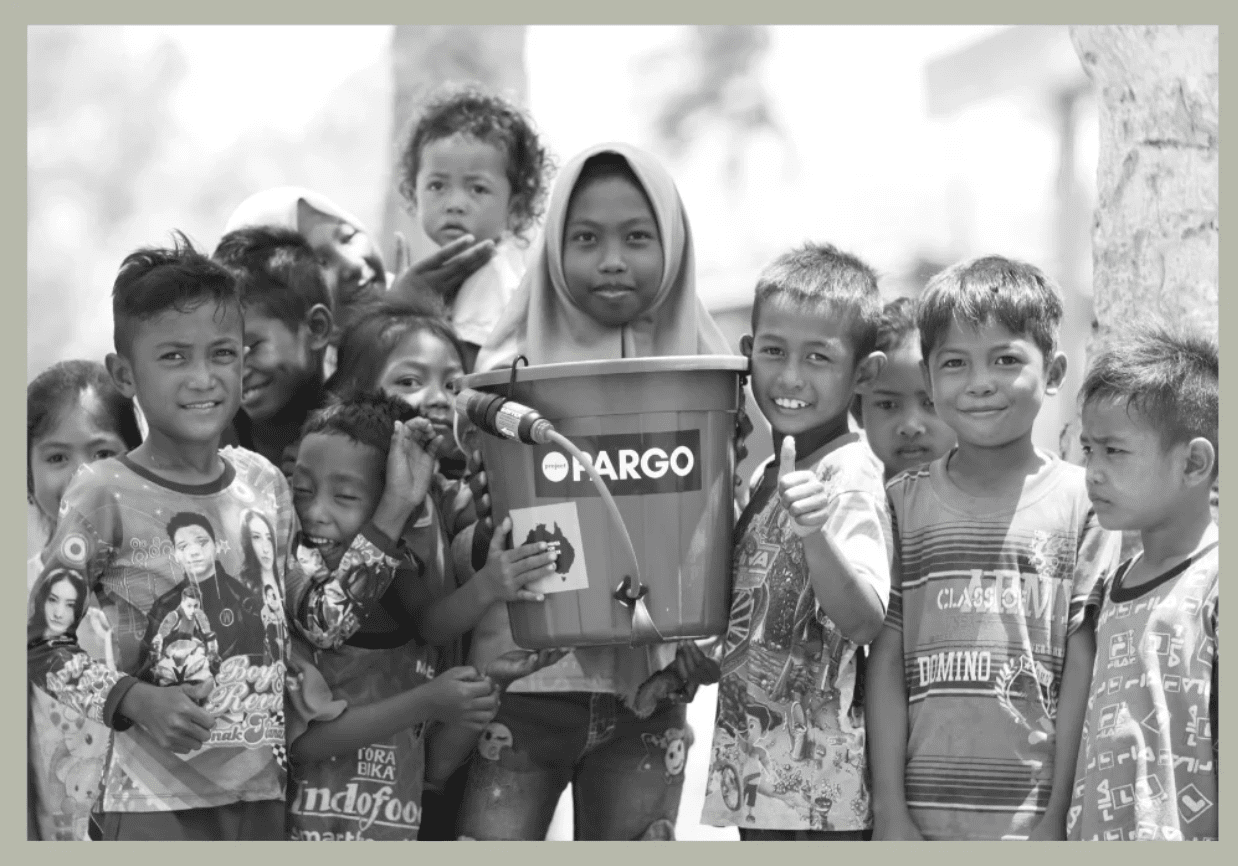
We are big admirers of the critical work done by Project PARGO; and we support their awe-inspiring impact on rural or vulnerable global communities. Their dedication to providing clean water, health education, and sustainable solutions is awe-inspiring.
That’s why Billi has chosen to ethically source our new insulated bottles from Project PARGO, to support their ongoing impact of international initiatives. Our shared commitment to sustainability and social responsibility drives this new collaboration. As our planet evolves, so too must our approach to managing the environmental impact. Together with Project PARGO, Billi aims to make a tangible difference, by choosing our products, you’re not only getting a high-quality, tested insulated bottle, but you’re also supporting a cause that matters. We’re proud to offer a cruelty-free alternative to those sourced from ethically questionable sweatshops.
Clean Water Access: A Global Crisis
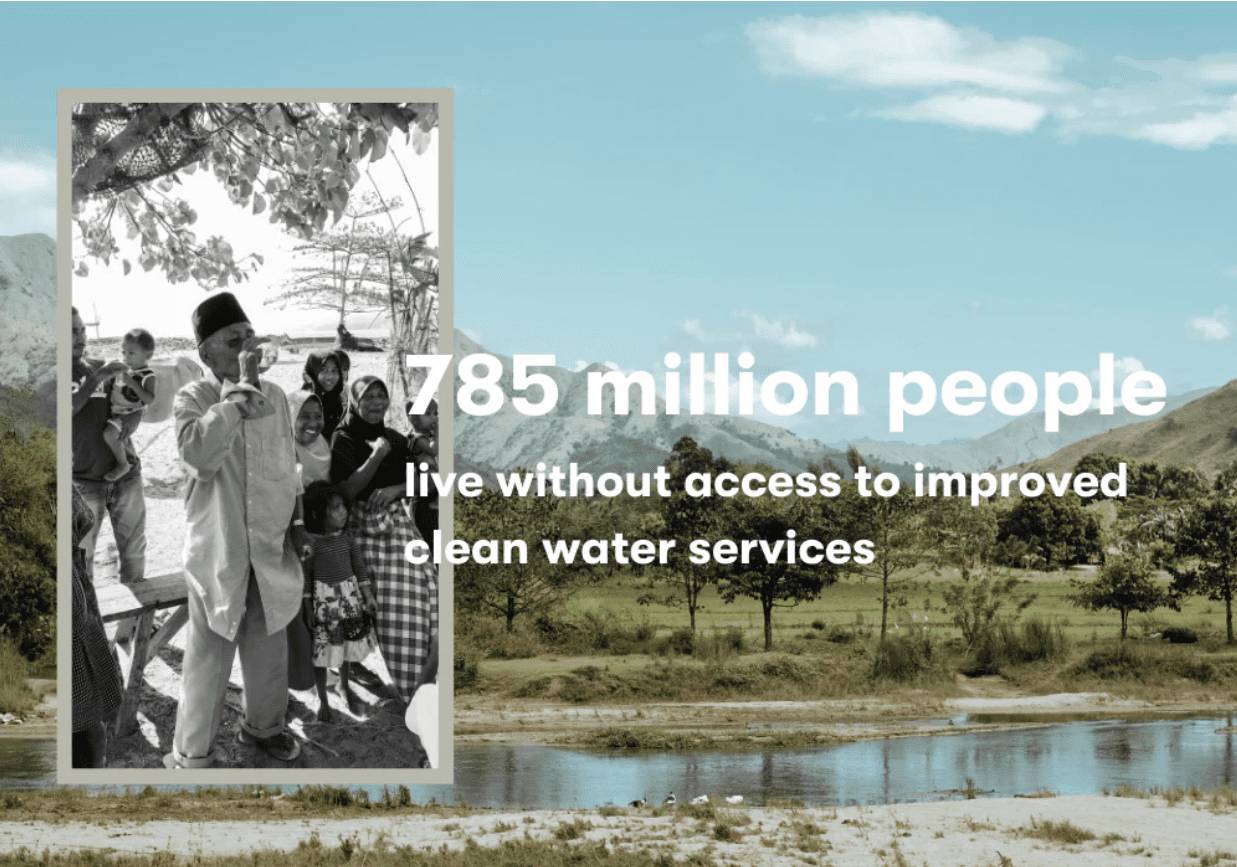
Over 785 million people worldwide lack access to clean drinking water (*The Guardian 2017). This means they rely on contaminated sources like wells, springs, and even surface water. This can lead to serious health problems, including diarrhea, malaria, and cholera.
The Danger of Dirty Water
Contaminated water has devastating consequences. It can cause death, especially among children, and hinders economic development. Women and girls are often burdened with the task of collecting water, limiting their opportunities for education and work.
The Power of Clean Water
Access to clean water and sanitation has a ripple effect on communities. It improves health, reduces poverty, and empowers women and girls.
The Need for Action
While progress has been made so far, there is still much to be done. We made a conscious decision to ensure that everyone, including future generations, has access to clean water and sanitation.
Have a look at PARGO’s latest Clean Water Projects to see the positive impact for yourself. Get involved by purchasing your own Billi-branded insulated cup or bottle. Your cuppa can make a world of difference to someone! a percentage of each purchase directly contributes to clean water initiatives across the globe.
Edited by Royce Tan
#Billiwater #projectPARGO #CleanWater #ThirstyForChange #Sustainability
Research References:
projectpargo.com/blogs/project-pargo/clean-water-crisis
by Dylan Rowe
The Guardian
www.theguardian.com//2017/access-to-drinking-water-world
World Health Organisation
www.who.int/water_sanitation_health/diseases-risks/
www.who.int//fact-sheets/drinking-water
United Nations Sustainable Development
www.un.org/sustainabledevelopment/water-and-sanitation/
The tapware industry is becoming a key driver of water efficiency, sustainability, and carbon neutrality, with innovations that reduce water usage while maintaining performance. Aligning with certifications like GreenTag and the WELL Building Standard, these solutions promote water quality, hygiene, and material safety, enabling architects to create healthier, resource-efficient buildings.
Tap Into Tomorrow: Blueprint for a Water-wise, Carbon-neutral Built Environment explores the intersection of innovation and sustainability in tapware. This whitepaper explores how modern smart taps are at the forefront of water efficiency, carbon neutrality, certification and user-led design. For architects and designers, integrating these new tapware solutions is essential for creating high-performing buildings that meet evolving environmental standards and client expectations.
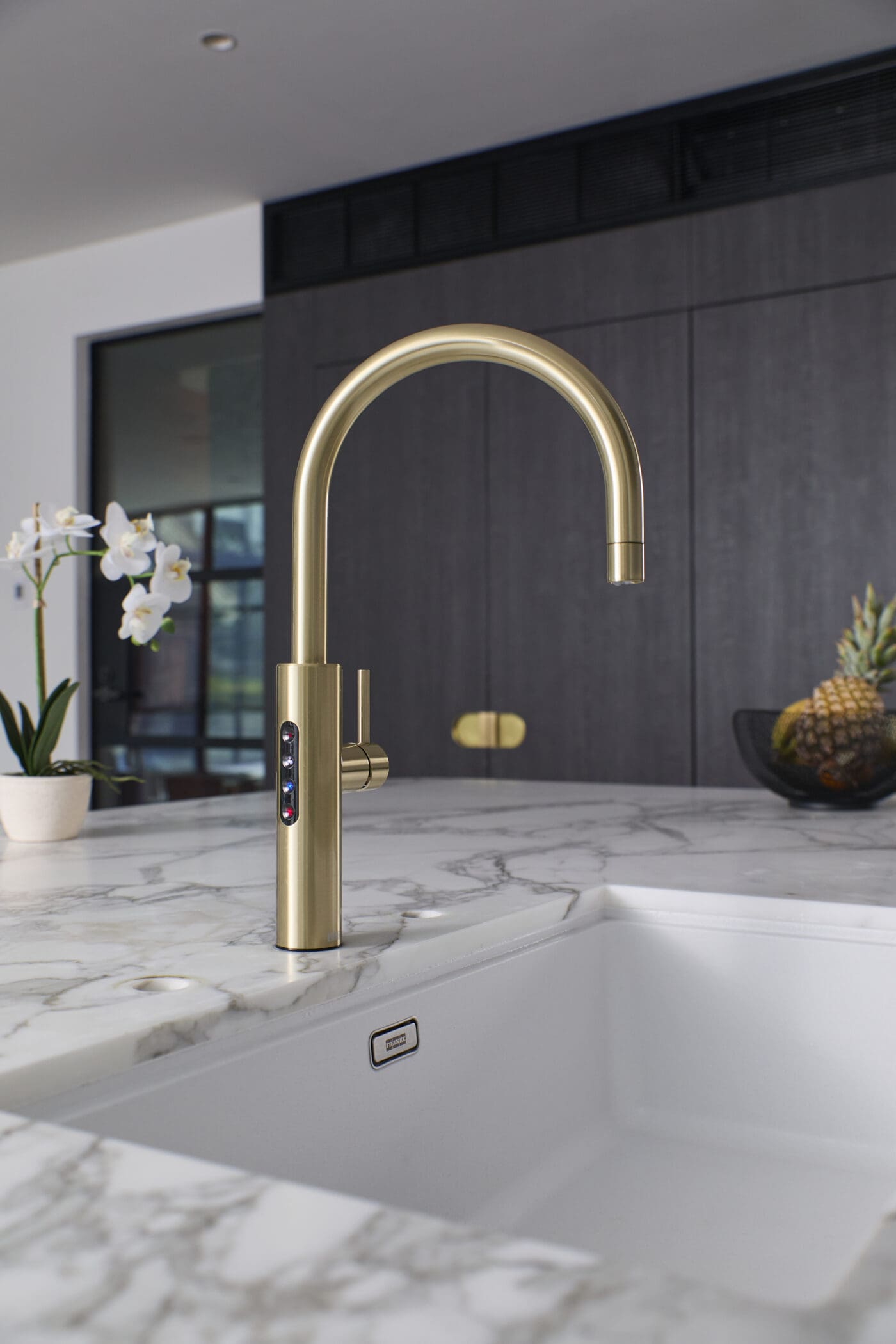
From the global leader in instantly filtered boiling, chilled and sparkling water systems, Billi’s Multifunction Mixer Tap aligns with broader sustainability and efficiency goals, offering a 5-star WELS rating and energy-saving features. Engineered through extensive research, the tap optimises water flow with a redesigned aerator and tap body manifold, while its touch-sensitive UI enhances user control and supports real-time water monitoring. By integrating multiple functions into a single fixture, the tap also promotes space-saving solutions for both residential and commercial applications.
Billi’s Multifunction Mixer Tap not only meets sustainability goals but also sets a new standard in engineering quality and user experience. Previous tapware solutions often required two separate fixtures or relied on off-the-shelf components that lacked design flexibility. The Multifunction Mixer Tap addresses these challenges with a refined engineering approach that resulted in a high tap body with 260mm of clearance, offering greater functionality in compact spaces. The slimmer, continuous arc from spout to outlet provides a sleek, modern aesthetic while optimising water flow. This innovation came after nearly 11 months of focused development, during which the aerator tip, tap body manifold, and spout were redesigned to create a more efficient, space-saving solution that remains fully retrofittable with existing Billi under-bench systems.
Flow meets function: When Billi’s Multifunction Mixer Tap flows into your kitchen and living space, it provides complete control over safety, space-saving, sanitation, and cooking needs for any household. The tap’s aesthetic appeal, combined with energy-efficient manufacturing and smart water management, aligns with what we are seeing in the taps of the future: water efficiency, carbon neutrality, and certification through user-led design. By leveraging data-driven insights, Billi continues to innovate in ways that support resource-efficient buildings and provide architects and specifiers with sustainable, high-performance tapware solutions
Download this whitepaper to explore the intersection of innovation and sustainability in tapware design.
[dearpdf id=”199739″ ][/dearpdf]
Trends in the Design and Manufacturing of Drinking Water Systems
A growing body of research on environmental health has demonstrated that chemicals known or suspected to be harmful to human health are frequently found in commercially available products, including building materials. These chemicals can leak out of such products, making their way into the air or drinking water and eventually into our bodies.
In response, whether they have been forced to do so due to legislation or in an effort to be more proactive in response to emerging health trends, manufacturers are exploring changes in the materials they use to create their products. Product transparency is becoming more common as manufacturers seek to gain trust by disclosing product ingredients and health impacts.
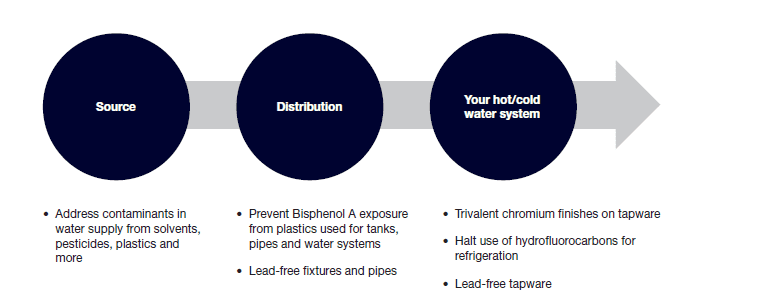
There are a number of chemical avoidance lists that have been created that list chemicals that should be avoided in building products. In relation to drinking water systems, the health effects
of chromium, and bisphenol A (BPA) are now better understood, resulting in industry- and government-led initiatives to eliminate their use. Some substances, such as hydrofluorocarbons
(HFCs), which have been used as refrigerants, are also being phased out due to their global warming potential.
This paper examines these material trends and how they impact the design of drinking water systems. Designers are becoming more informed, demanding healthier building products, and taking the initiative to educate themselves about product certifications, including WELL, Red List and Watermark. As a result of collaboration across the industry, including with manufacturers, there are more and more products on the market that do not contain harmful chemicals.
Revisiting the “forever chemicals
A recent study revealed widespread contamination of surface and groundwater with “forever chemicals” (PFAS) globally, including Australia. These harmful chemicals are found in various products, such as firefighting foams, food packaging, carpets, and clothing. PFAS are persistent pollutants that do not break down in the environment and have been linked to serious health risks.
To address this growing concern, the Australian government is taking steps to restrict PFAS use and implement stricter regulations, with perfluorooctane sulfonic acid (PFOS) and perfluorooctanoic acid (PFOA) being among the most widely studied. This whitepaper highlights the importance of understanding the dangers of PFAS and the need for proactive measures to protect our water sources and safeguard public health.
How Billi is shaping material health outcomes
For almost three decades, Billi has led the global market with innovative tapware and instant boiling and chilled water filtration systems. Proudly Australian-made and designed, Billi products are
celebrated for their combination of functionality, performance and contemporary aesthetics.
Driven by a strong research and development team and a commitment to improving user health and quality of life, Billi supplies a range of instant boiling and chilled water dispensers that meet strict material health requirements that are continuously developing at a national and international level.
Whether it is chromium finishing, lead-free and BPA-free product design, or the use of sustainable refrigerants, Billi is always supporting current trends for sustainability and wellness, addressing the hydration needs of their users in a safe, efficient and environmentally friendly manner.
In today’s market, transparency in sustainability is a necessity for businesses across industries. Billi addresses this with independently verified and registered Environmental Product Declarations (EPD) under EN 15804.
In addition, Billi products have achieved Global Greentag certification and LCARate Gold Program recognition, providing assurance of the sustainability and fitness of their products throughout their lifecycle. Billi’s repair vs. replace ethos plus the introduction of R290 Green Gas allow Billi to be assessed under the newest version of the standard.
All Billi products are fully compliant with Watermark as well as the relevant Australian Standards and deliver extended ease of use, efficiency and a sleek contemporary aesthetic regardless of their
installation context.
Download the Architecture & Design whitepaper for the full article.
[dearpdf id=”186295″ ][/dearpdf]
Organisations are grappling with the reality that a substantial percentage of their employees may never return to the office on a full-time basis. Today’s employees’ attitudes are changing, placing greater emphasis on flexibility and relying more on employers to drive a culture of health and wellbeing.
Wellness initiatives are no longer a workplace perk; they are a necessity, offering a way for employers to encourage healthy lifestyle choices and invest in their
employees’ happiness. Considering how important water is to the functioning of the human body, one of the key strategies to improve workplace wellness is hydration.
Dehydration happens when our bodies lose more water than we take in. Although it occurs more frequently during physical activity or illness, employees in the workplace can also experience this simply by forgetting to drink enough fluids.
Promoting sustainability through hydration
In Australia, bottled water is a major contributor to landfills. Only 36% of PET plastic water bottles are recycled, which means that 373 million plastic water bottles end up as waste every year.7 Instant filtered hydration systems provide easy and convenient access to drinking water, enabling employees to reduce their consumption of bottled water products.
In addition to reducing plastic waste, hydration systems contribute to sustainable building ratings such as Green Star, the Well Building Standard and LEED. For example, the WELL Building Standard focuses on eight areas—fitness, comfort, air, water, mind, nourishment, light, and innovation—that are essential to a healthier work environment. Within this framework, the Standard promotes safe and clean water through the implementation of proper filtration techniques and regular testing in order for building occupants to receive optimal quality of water.8
When specifying hydration systems, it is important to consider the environmental, social and economic impact of your chosen products and materials over the whole product life cycle. Some systems incorporate technology to improve their energy efficiency, which may include stand-by power modes, heat-exchange technology and insulation to reduce heat loss.
Billi, your partner in workplace wellness
Proudly Australian made and designed, Billi has been at the forefront of the instant filtered boiling, chilled and sparkling water systems industry for over 30 years. The company’s in-house research and development team works side by side with our highly skilled manufacturing engineers to deliver superior instant filtered water systems locally and around the world.
Today, Billi continues to innovate and keep pace with modern techniques, contemporary interior concepts, and ever-changing lifestyle changes. And importantly, Billi products continue to incorporate improved eco-technology features.
One standout for modern workplaces is the Quadra range of filtered water dispensers. Quadra is Global GreenTag certified, which means the products pass the world’s toughest standards for health, eco performance and safety and contribute credits to a wide range of sustainable building rating tools.
Billi Quadra uses Natural Gas refrigerant (R290), which has no ozone depletion potential (ODP) and a negligible direct global warming potential (GWP). R290 has a GWP of below five, according to the Department of Climate Change, Energy, the Environment and Water. In addition, R290 exhibits exceptional thermodynamic characteristics, enhancing heat transfer efficiency and expediting cooling processes. With outstanding heat transfer capabilities, R290-powered systems demand less energy for temperature control, thus diminishing energy usage and reducing utility expenses.
The product comes with a two-year warranty, and it is Watermark certified.
Billi also offers refillable service plan options to ensure continuous drinking water onsite. With periodic plans and plans available for sites with multiple units, Billi offers a bespoke management system for any customer need.
Check out Architecture & Design whitepaper for the latest industry insights.
[dearpdf id=”167423″ ][/dearpdf]
Multi-Functional Appliances for Multi-Functional Spaces
As working, socialising, and relaxing from home become the new normal, homeowners and designers want to know how to design a multi-functional kitchen so they can adapt their space to cater for more activities. Given that the kitchen is the ‘heart of the home’ and is typically included in an open-plan layout, it is crucial to think of this area in terms of function and aesthetics.
Multi-functional appliances take on a whole new importance when you are looking to maximise space usage, efficiency and convenience in one integrated environment. Below we look at the design considerations when designing a human-centred kitchen space and specifying multi-functional appliances that are centred around modern life.
Accessibility and storage
Over designing storage for multiple single-use appliances is a common mistake. Choosing appliances with dual functions is a great way to save storage and counter space, as you only need to find room for one device rather than two.
Adding functionality to smaller spaces
A well-planned, multi-functional layout makes life simple, even when space is limited. A combination oven and microwave is a practical way to save work space, for example, without reducing cooking options. Another solution is a multi-function filtered drinking water system, which provides boiling water for cooking and hot beverages, and chilled and sparkling water for guests, while eliminating the need for space-occupying water bottles, kettles, tanks and other bulky equipment.
Increasing productivity
A permanently-installed appliance has the added benefit of eliminating the time that is wasted setting up and packing down appliances, or cleaning or setting up a space to facilitate a single task. In addition, a permanently-installed product can be used on demand at any time and does not create clutter. All these factors mean users can achieve their desired outcome quicker and easier and get back to what they were doing without wasting time.
Sustainability matters
Making efficient product choices is just one factor when planning a sustainable kitchen renovation. It is also important to consider the environmental, social and economic impact of your chosen products and materials over the whole product life cycle, from production to final disposal. Additionally, you must also consider what your chosen supplier or manufacturer is doing about reducing waste and emissions in their own operations and supply chain.
While traditional appliances are the go-to for most homeowners, the cumulative environmental impact of multiple single-function appliances can be significant in relation to energy needs, single-use plastic production and transport. For example, filling a fridge with bottled water may seem like a cost-effective solution for on-demand drinking water, but it takes up valuable fridge space and contributes to increasing consumption of single-use plastics. In Australia, we already buy billions of plastic bottles each year, with 53% of those plastic bottles ending up in landfill and 12% entering our environment.
Energy saving and affordable
It is important to conduct a life cycle assessment to consider the cost of ongoing consumables or the need to fully replace an appliance instead of maintaining or repairing. For example, a benchtop sparkling water maker or jug filter may be cost-effective upfront, but both will have high ongoing costs to replace the C02 cylinder or water filter, respectively. An underbench filtered water system that also provides sparkling water may be more expensive upfront but may be comparable in terms of running costs and provides a space-saving and dependable drinking water solution.
Why Billi is the answer for modern kitchens
Maximise space and storage Billi’s concealed multi-function filtered drinking water appliances integrate seamlessly into modern kitchens, offering up to five types of water including domestic water for the sink from a single fixture. With the smallest footprint on the market, Billi’s underbench modules save space and increase capacity for other kitchen convenience items.
Increase functionality and convenience Billi’s Home range is the ideal addition to any kitchen, giving you the convenience of instant filtered water in a range of options, including chilling and sparkling for entertaining or instant boiling water for cooking. Billi’s multifunction tapware offering tactile and contactless user interface, making it the only dual operation dispensers in
the market, with enhanced reliability and the elimination of accidental dispense.
Health and wellbeing
Billi’s water-cooled range of appliances run cooler, quieter and do not pollute the surrounding atmosphere with dust or exhaust heat. UVC filtration can be fit to all Billi products or retrofit to those already installed. UV water purification systems are compact, non-intrusive and are extremely effective at destroying illness-causing microorganisms.
Ensuring the highest level of drinking water available, Billi’s filter range is tested in accordance with NSF standards, an internationally-recognised public health and safety organisation.
Reduce energy consumption
Billi provides eco-friendly and energy-efficient water systems that offer energy-saving heating and cooling processes and time-switch modes to eliminate unnecessary power consumption.
Protect the environment
With its state-of-the-art water filtration systems, Billi sets new standards in environmental sensitivity. Billi’s patented technology
recovers and reuses energy to preheat the boiling water, thereby saving energy. Billi systems also offer unique power consumption advantages, including thermodynamic heat-exchange technology, high-performance polyethylene insulation, and standby modes to conserve power. Recyclability and eco-friendly material choices also
contribute to a low environmental impact.
In addition to providing high-quality water systems, Billi addresses the global plastic problem by offering borosilicate (glass) water bottles, double-wall insulated water bottles, and reusable keep cups to avoid disposable solutions or single-use plastic bottles. The company is also committed to sustainability across their entire operation, implementing renewable energy and waste reduction initiatives across its manufacturing plants.
Visit our product range now.>>
Continue reading the Artichecture & Design whitepaper:
[dearpdf id=”149715″ ][/dearpdf]
Despite the prevalence of remote work, many organisations maintain that employees must physically return to the office, at least in some capacity, to maintain high levels of productivity and feel a part of the workplace community. However, since the pandemic, employees have grown accustomed to working from home and, for health or lifestyle reasons, are reticent to
come back to the workplace on a full-time basis. Due to these factors, employees will increasingly switch between working from home and traditional office buildings in the post-COVID world. This is what we refer to as the “hybrid” workplace.
Making the office a place that people actually want to visit, even when they do not have to, is the most significant challenge for workplace designers.
Organisations need an efficient, compelling and healthy place to work to not only convince staff to return to the office, but to retain existing staff and attract new talent in
a highly competitive labour market. Factors like flexibility, comfort and wellbeing are among the highest priorities for today’s workforce. Organisations need to cater to
these demands within a space that is cost-efficient and sustainable without over-compensating and creating restrictions.
The goal is to achieve the best of both worlds: to keep the flexibility and work-life balance that employees have grown to value from remote work, while also bringing employees back together to foster collaboration, and renew and strengthen workplace ties. The answer involves adding design features, conveniences and perks that try to be more meaningful than those of the prepandemic
past, and spotlight the employee experience as the focus of future workplace design.
How Billi is creating hybrid spaces that work
Originating in Australia, Billi has been at the forefront of the instant filtered boiling and chilled water systems industry for three decades.
Billi products are celebrated for their combination of functionality, performance and contemporary aesthetics and all come with an assurance of quality, innovation and sustainability. The company has brought the unique concept of underbench instant filtered boiling, chilled and sparkling drinking water to many countries around the globe.
Billi products enable the provision of convenient and value-added drinking water with multifunction appliances that help hybrid workplaces replicate the comfort and convenience of the home
environment. OmniOne is Billi’s latest product range offering Boiling, Chilled and Sparkling water in a single, all-in-one fixture for commercial and residential applications alike.
Manufactured to strict quality standards, Billi water systems come with an assurance of quality, innovation and sustainability.
Incorporating cutting edge eco-technology features and modern designs, Billi delivers solutions that keep pace with the needs of employers and employees in today’s dynamic hybrid work landscape.
Since 2019, Billi has demonstrated its commitment to enhancing buildings and communities to help people thrive as an accredited Cornerstone member of the International WELL Building Institute.
Billi instant filtered boiling and chilled water systems provide designers and specifiers with a way to meet the health, wellbeing and sustainability requirements of the WELL Building Standard, the
paramount global standard for improving overall occupant wellbeing and workplace quality.
Billi also supports high-quality indoor environments with chilled only or chilled and sparkling hydration stations with water-cooled devices that do not raise the ambient temperature, create additional load on air conditioning or negatively impact indoor air and acoustic quality. The Billi range also includes contactless washroom solutions
including soap dispensers and sensor tapware.
Continue reading the Artichecture & Design whitepaper:
[dearpdf id=”124765″ ][/dearpdf]
The built environment: Emissions and waste
The built environment generates 40% of annual global CO2 emissions.1
Construction creates an estimated third of the world’s overall waste.2
Approaches to sustainable building
Net Zero
Utilising passive design, energy-efficient appliances and renewable energy systems to create buildings wherein their total energy production minus their total energy use equals zero.
Passive house
A set of highly-engineered energy efficiency and design standards that use environmental factors, such as passive solar, to keep energy use as low as possible.
Living Buildings
Regenerative buildings that connect occupants to light, air, food, nature, and community. Self-sufficient and remain within the resource limits of their site. living-future.org
Applying sustainable thinking to filtered water systems
Australians spent about $580 buying 504 litres of bottled water per person.
It takes a greater amount of water in a bottle of water to make it as it does to fill it.
80% of plastic waste ends up in landfills or in the natural environment.
Identifying sustainable water solutions is an essential requirement to reduce the environmental footprint of buildings and create long-term value for customers.
Why Billi?
With its state-of-the-art water filtration systems, Billi sets new standards in environmental sensitivity, helping businesses to reduce their carbon footprint.
Provides a sustainable alternative for drinking water, reducing demand for single-use plastic bottled water.
Product innovations
Billi Eco, Quadra and Quadra Plus products are certified Gold Level under Global GreenTag standards.
Billi’s patented technology recovers and reuses energy to preheat the boiling water, thereby saving energy.
Unique power consumption advantages, including thermodynamic heat-exchange technology, high-performance polyethylene insulation, and stand-by modes to conserve
power.
Company initiatives
Billi offers borosilicate (glass) water bottles to avoid disposable solutions or single-use plastic bottles.
Reduced the number of plastics in their packaging, preferring to use only recycled materials where possible.
Reduced printing and energy consumption by using QR codes for brochures and guides.
Operations
Billi’s total commitment to sustainability extends across its entire operation. Take, for example, Billi’s manufacturing plant in Thomastown. Solar covers 38% of the factory’s total consumption. With its approximately 600 solar panels and six 20kW inverters, the factory generated 166MWh of energy in 2022, 94MWh of which was used onsite and 72MWh fed back to the grid.
REFERENCES
1 https://architecture2030.org/why-the-building-sector/
2 https://ec.europa.eu/environment/topics/waste-and-recycling/construction-and-demolition-waste_en
[dearpdf id=”108815″ ][/dearpdf]