
Billi is proud to support the Pickles and Magpies teams from Churchlands Senior High School WA for the 2026 Pedal Prix season.
Pedal Prix is a student endurance racing program where teams design, build, maintain and race human-powered vehicles in long format team events. The program gives students practical experience in engineering, teamwork, problem solving and endurance while encouraging collaboration both on and off the track.
The opening round in Bunbury WA brought together students, teachers, volunteers and families for a successful day of racing and learning.
With vehicles running strongly throughout the event, students worked together across driving, mechanical support, strategy and team operations to keep everything moving smoothly during the 14-hour race day.
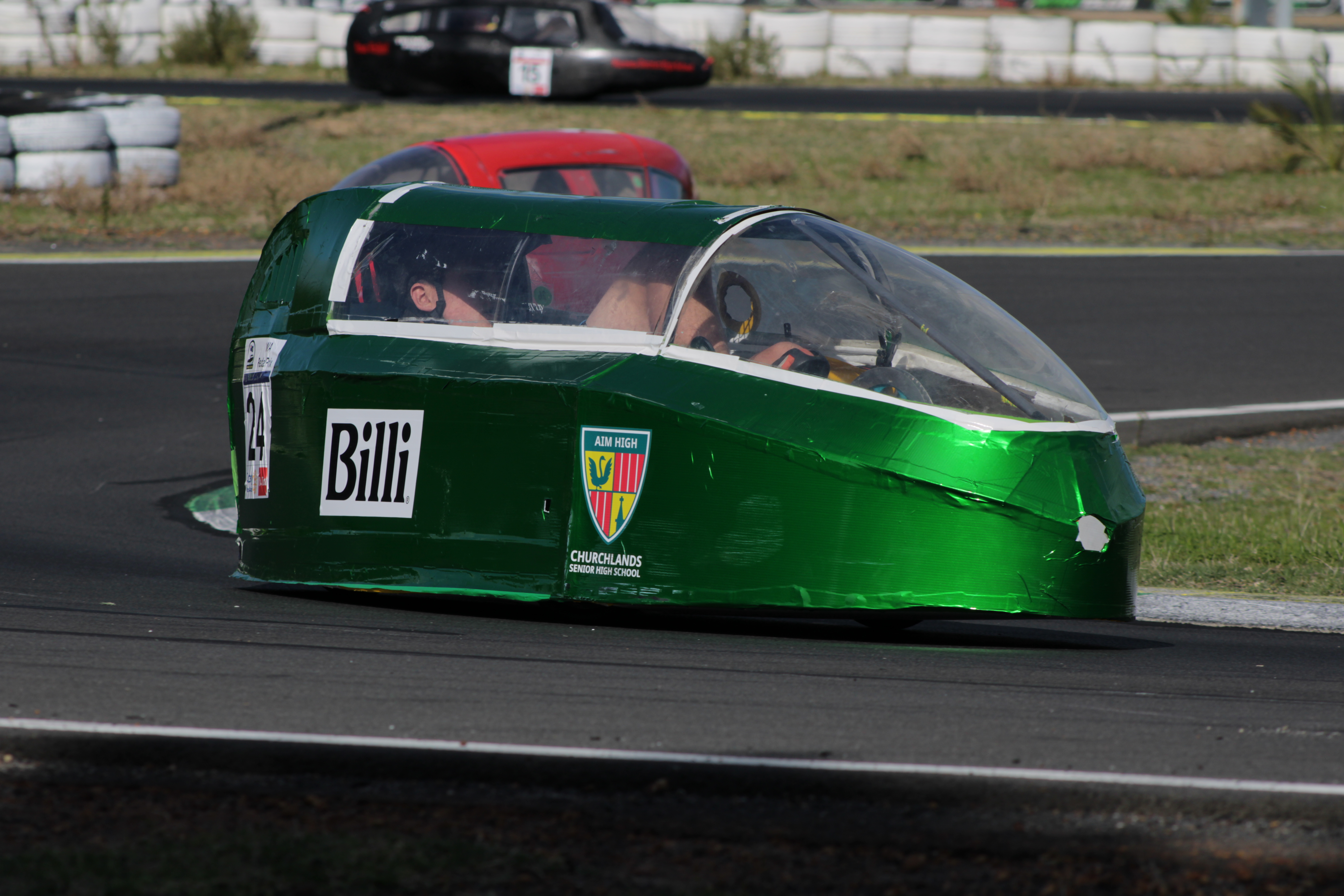
Programs like Pedal Prix create valuable opportunities for students to apply classroom learning in a real world environment. Students develop practical technical skills while also building resilience, communication, leadership and teamwork through shared challenges and competition.
At Billi, innovation and continuous improvement are central to our culture. As a company with a strong focus on engineering, product development and in house research and development, we are passionate about supporting programs that encourage students to explore practical problem solving and hands on learning experiences.
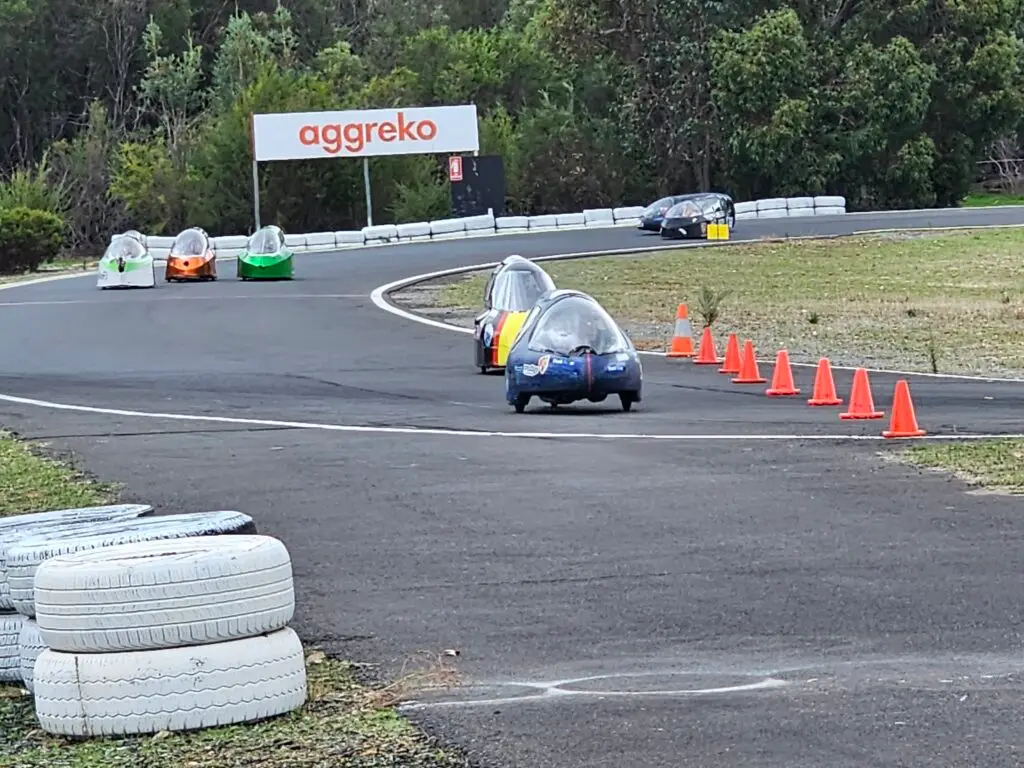
Billi’s sponsorship helps support team operations across the season and contributes towards equipment, maintenance, race preparation and reducing participation costs for students.
We congratulate all students, staff, volunteers and families involved in the Bunbury event and look forward to following the Churchlands Senior High School teams throughout the 2026 Pedal Prix season.
Media Contact:
Christy Minutoli
Marketing Manager ANZ
christy.minutoli@billi.com.au
Royce Tan
Marketing Coordinator – Brand & Content
royce.tan@billi.com.au
Safety, Quality, and Sustainability: Billi Group’s ISO Journey
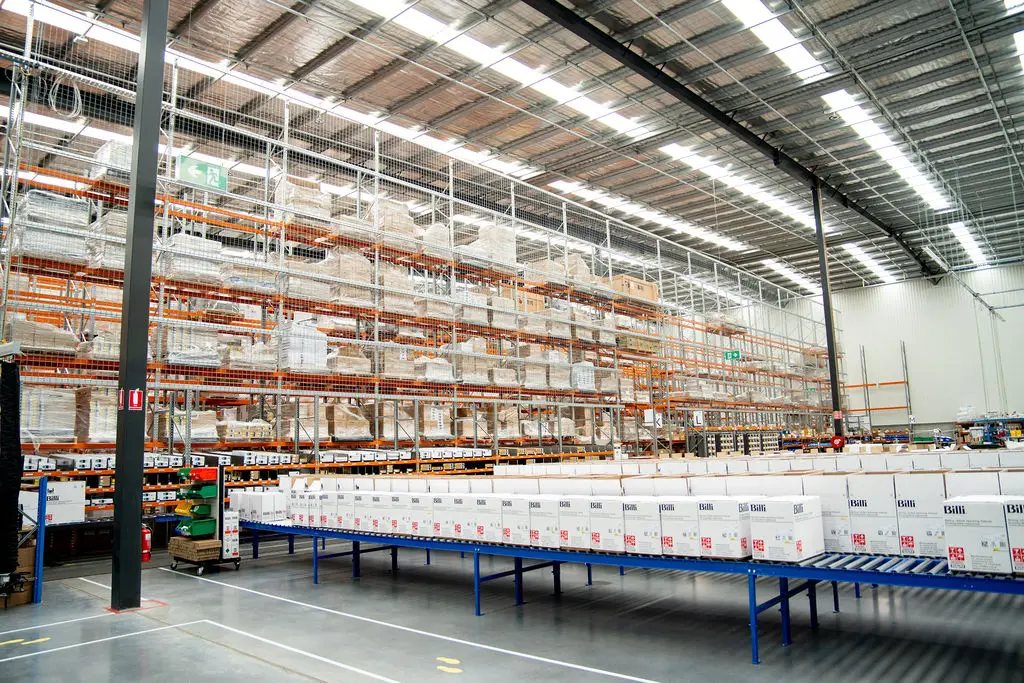
At Billi, we believe in our rallying mantra of “The Power of One”—it is an apt call to unite our expanding influence as a global company. Following our recent relocation to our new headquarters and factory office in Reservoir VIC, we are proud to announce that our commitment to excellence at this fit-for-future facility has been officially re-certified.
At the end of 2025, Billi Australia successfully completed a comprehensive audit with BSI Global. This audit was a critical step in updating our certifications to reflect our new operations, ensuring that our management systems remain world-class as we expand our manufacturing and distribution capacity.
A Message from Leadership
In recognition of our ongoing dedication to these standards, David Gardiner, Billi WHS Manager ANZ, shared his thoughts on the importance of this milestone:
“For this World Day for Safety and Health at Work, Billi reaffirms our commitment to ISO 9001, 45001 & 14001 – Work Health and Safety standards. By embedding safety into every process, we ensure the wellbeing of our people, partners, and customers every day.”
What Does ISO Mean?
While many recognise the name, few know its origin. ISO is the short name for the International Organisation for Standardisation. It is not an acronym, but a name inspired by the Greek word isos, meaning “equal”. This reflects a global mission to create consistency and equality in standards worldwide, regardless of language or location.
(*reference: https://www.iso.org/about)
The Gold Standard: Billi’s Certified Systems
The recent audit was rigorous, covering three vital pillars of our business operations:
- ISO 9001:2015 (Quality Management System): Ensuring our products and services consistently meet customer and regulatory requirements.
- ISO 14001:2015 (Environmental Management System): Demonstrating our dedication to reducing our environmental footprint, improving resource efficiency, and driving sustainable practices.
- ISO 45001:2018 (Occupational Health & Safety): Confirming that we prioritise the health, safety, and wellbeing of our team above all else.

A Perfect Result
“We are thrilled to share that the audit was completed with zero findings. Our certifications have been officially updated to our new address, confirming that our new facility operates at the highest possible global standards.
By meeting the ISO 45001 standard, we have proven our commitment to a safe workplace for everyone. Likewise, our ISO 14001 certification underscores our ‘duty of care’ as we navigate our global impact and sustainability goals.”
Driven by the “Power of One”
This achievement is a direct result of the dedication and collaboration of the entire Billi team. As we progress through 2026, these certifications provide the solid foundation needed to present a single, strong, and safe front to our partners and customers worldwide.
Together, we are embedding best practices into every tap we manufacture and every system we design, ensuring that sustainability and safety remain at the forefront of the Billi legacy.
About Billi Australia
For over 35 years, Billi has been designing and manufacturing premium instant boiling, chilled and sparkling filtered water systems in Australia. Renowned for quality, innovation, and timeless design, Billi products are specified by leading architects and designers and trusted by homeowners who demand the very best.
Media Contact:
Christy Minutoli
Marketing Manager ANZ
christy.minutoli@billi.com.au
Royce Tan
Marketing Coordinator – Brand & Content
royce.tan@billi.com.au
Empower sustainable specification with Billi’s Quadra and Quadra Plus.
Featuring high RPV scores and robust Green Star Fitouts compatibility, these systems simplify achieving credits across key categories – helping specifiers meet targets and advance Australia’s transition to a greener built environment.
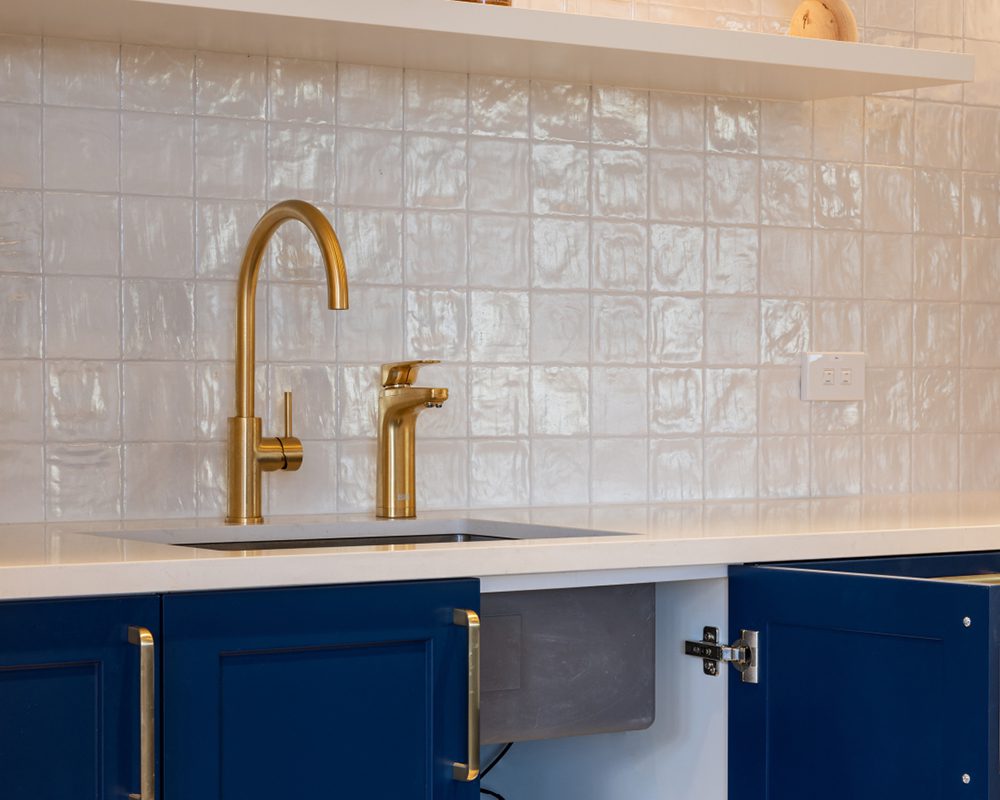
The pursuit of a sustainable built environment is a journey driven by uncompromising vision, unwavering commitment and bold action. Yet, the milestones along the way are not marked by lofty ideals alone – they’re punctuated by the tangible reality of numbers, documents and meticulously measured metrics. This is especially true when navigating the complexities of sustainability certifications and ratings – but the sheer volume of data associated with specified materials and products can feel particularly overwhelming.
And so, with the new Green Star Fitouts rating tool’s launch as a backdrop, we explore how specifiers can strategically consider product selection to achieve tangible results within the established frameworks used today and – through the lens of Billi’s Quadra and Quadra Plus systems – answer a fundamental question: why are product sustainability metrics essential in facilitating this process?
ACHIEVING CREDITS THROUGH SUSTAINABLE SPECIFICATION
Industry professionals will be familiar with the Green Star Buildings rating tool, a fundamental device on the path to Green Star certification. And now, sharing the same methodology, the Green Star Fitouts rating tool is set to roll out, evolving its Green Star Interiors counterpart and raising the bar on carbon, well-being and circularity.
The tool is set to provide a framework to achieve a rating by accumulating credits across five different categories: Circular, Responsible, Healthy, Positive and People. It will set out specific criteria to assess whether – and how well – a project is meeting the credit outcome, falling into one of the performance levels: Minimum Expectation, Credit Achievement and Exceptional Performance.
THE VALUE OF THE RESPONSIBLE PRODUCT VALUE (RPV)
Architects, designers and specifiers will need to demonstrate that the products they specify meet outlined sustainability benchmarks, and a crucial mechanism that will help them assess a product’s contribution to the credits will be the Responsible Product Value (RPV).
An RPV is calculated based on an initiative’s ability to meet criteria that sit across the Responsible, Positive, Healthy and Circular categories. Each of these carries a fixed-point value, and their sum amounts to the product’s total RPV.
HIGHER RPV, HIGHER POTENTIAL: THE QUADRA EXAMPLE
Specifying products with an RPV may contribute towards achieving the Responsible products credits and Billi’s Quadra and Quadra Plus systems – with an RPV of 16 – are an excellent showcase of that methodology. Their RPV score is based on their Global GreenTag product-specific EPDs – worth five points – and their Global GreenTag LCARate Gold certification – which is worth 11 points.
THE GREEN STAR RESPONSIBLE PRODUCTS FRAMEWORK
While the Fitouts tool is yet to be rolled out, the mechanism for assessing products against these categories is already well-established in the Green Star Buildings tool, providing a framework outlining how a product’s metrics can translate into tangible outcomes and ratings.
Quadra and Quadra Plus can contribute to achieving the Responsible Products credits in Green Star. In the Green Star Buildings rating tool, the RPV of 16 allows them to contribute to achieving credits in the Responsible Systems category, placing them in the Exceptional Performance tier with a required minimum RPV of 11 at a product level.
THE ALL-ELECTRIC BENEFITS
As all-electric units, the Quadra and Quadra Plus systems can also help pursue goals related to fully electric and fossil-fuel-free outcomes, which might require the project to use electricity to power heating and cooling, domestic hot water and cooking.
HEALTHY, LOW-TOXIN MATERIALS
Both systems contain no VOCs or BPA and are Watermark and WELL-certified. In addition, the Gold Level certification under Global GreenTag standards, along with the maximum score for Health & Toxicity the products achieve, further highlights the system’s potential to help support obtaining relevant outcomes within existing frameworks.
WATER EFFICIENCY
In addition, Quadra and Quadra Plus systems’ WELs ratings and flow rates – ranging from 5 stars and 5 litres per minute to 6 stars and 4.5 litres per minute, depending on the chosen dispenser option – can help industry professionals meet relevant criteria for water efficiency.
SUPPORTING OCCUPANT WELLNESS
Beyond direct credit contributions, the Quadra and Quadra Plus support the goals of a healthy indoor environment. Their ergonomic design enhances usability, while the silent, water-cooled operation contributes positively to acoustic comfort. And by not requiring cabinet ventilation, they also prevent unwanted heat from impacting thermal comfort in occupied spaces.
EPD AND THE UPFRONT CARBON REDUCTION
Plus, Quadra and Quadra Plus’ product-specific EPDs equip architects, designers and specifiers with a crucial metric they require to meet the upfront carbon reduction criteria – the Upfront Reduced Carbon unit, which is 167kgC02e/Unit for Modules A1-A3 (cradle to gate).
To achieve the credit under Minimum Expectations, the upfront carbon emissions will have to be at least 10% less than those of a reference fitout, for Credit Achievement – 20%, and for Exceptional Performance, the fitout’s upfront carbon emissions will have to be at least 40% less than those of a reference fitout.
Any project seeking a rating under the Green Star Buildings framework will have to reduce its upfront carbon by a minimum of 10% for Minimum Expectation, while any project seeking higher ratings will require a reduction of 30% to achieve the Credit Achievement. Billi’s product-specific EPD provides the exact third-party verified data required to make this calculation.
“It’s essential for industry professionals to collaborate with suppliers to identify opportunities to reduce the project’s carbon footprint throughout the entire supply chain,” says Fergus Tough, Billi’s Director of Manufacturing Operations.
THE COLLECTIVE NEED FOR A SUSTAINABILITY STEP-UP
There is no doubt that architects, designers and specifiers can leverage the potential of sustainable products with robust sustainability metrics – like Quadra and Quadra Plus – to unlock an effective pathway to relevant ratings and a greener built environment overall. And with the new Green Star Fitouts rating tool being rolled out, the navigational toolbox industry professionals have at their disposal is getting increasingly more nuanced and demanding.
“Based on the Green Star Building system rollout in 2022, and the Green Star Fitouts in 2025, with planned stricter requirements in the coming years, we see that the supplier side of the equation will be called to accountability as well,” says Fergus. “This system calls for prior consideration of the end-user’s well-being and better monitoring from cradle to grave of our product lifecycle. This changes the perspective to a much more holistic one and will drive faster improvement in fitout design for the industry.”
Based on the fact that the Quadra system’s cradle-to-grave number is 175.98 kg CO2 Eq (Carbon Dioxide Equivalent) – about 35% lower than the industry average for worst case product (271.7 kg CO2 Eq) – Billi is certainly well equipped to lead the way.
STRENGTHENING “AHEAD OF THE MARKET” COMPLIANCE
Sitting in the top 35% of Global GreenTag internal rankings with “ahead of the market” compliance, both Quadra and Quadra Plus set an example for highly considered product development. But how is Billi planning to strengthen its leadership position in metric-driven sustainable hydration solutions and in Green Star Fitout compliance?
“We have recently launched with BIMSTORE to keep our digital drawing and 3D files accessible and up to date, and we provide ongoing information to third-party industry websites like Architecture & Design to improve product navigation and search,” says Christy Minutoli, Billi’s Marketing Manager ANZ. “We’re also about to release Billi’s first sustainability report and are ramping up our ongoing collaboration with Global GreenTag and the broader architecture and design industry, with a few exciting initiatives currently underway.”
Billi is also transitioning older units to R290 gas. “That means we’ll be adding a few more options to our sustainable products range – and expanding options for Green Star applicants in buildings or specification design.”
Ultimately, the journey towards achieving Green Star certifications and fostering a more sustainable built environment is intrinsically linked to robust sustainability metrics. And as Green Star tools continue to evolve and demand more from manufacturers, products like Quadra and Quadra Plus – with their independently verified metrics, impressive RPV and the company’s plans to expand their sustainable product range – serve as prime examples of how manufacturers can empower architects, designers, and specifiers to make sustainable product choices and confidently navigate the path to achieving their Green Star aspirations.
SUSTA I N A B I L I T Y AWA R D S 2 0 2 5
S U S TA I N A B I L I T Y eBOOK 2025
BRANKO MILETIC, EDITOR
[dearpdf id=”256736″ ][/dearpdf]
Launched in 2006, Billi’s Quadra system revolutionised underbench drinking water systems with energy reclaim technology and user-first design. Nearly two decades on, Quadra continues to set the benchmark for efficiency, sustainability and design innovation in residential and commercial water systems.in residential and commercial water systems.
When Billi launched in 1989, the small, Aussie-grown company was bursting into an establishing water filtration market with some pretty groundbreaking ideas on how to galvanise the industry. And they accomplished this ambitious vision by introducing Australia to the first underbench boiling and chilled drinking water system only a few years later. This pioneering launch laid the groundwork for Billi’s future prominence in the market, setting in motion years of innovation and exciting technological and product releases.
One of them was the landmark launch of Billi’s signature Quadra underbench water system in 2006. Pioneering a unique heat energy reclaim system that significantly enhances energy efficiency, at the time of launch, the Quadra range solidified Billi’s reputation as an innovative, environmentally-driven disruptor in the water systems space. And now, almost 20 years on, we take a closer look at the Quadra range to uncover the innovation behind this revolutionary system, understand how it’s maintained its unwavering relevance over the years, and explore the design philosophy that brought it to life in the first place.
THE END USER
“The end user has always been at the heart of our design philosophy,” says David Craggs, Billi’s Head of Research & Development.
“From the meticulous design of our hot water safety labels and the addition of a digital user interface to expanding user controls for temperature settings, perfecting the spout splash dynamics and dispenser design – we’re constantly improving our product design to enhance user experience.”
It’s evident that the very same, user-driven ethos informed Quadra’s mid-2000s launch. While there was quite a lot of innovation happening in the water system space at the time, Quadra introduced some particularly inventive features that directly addressed shifting consumer needs and evolving requirements of the built environment.
In essence, Quadra’s innovative heat energy reclaim system captures and reuses the energy produced during the chilling cycle to preheat the boiling water, leading to significant energy savings and improved efficiency. In addition, Quadra introduced water-cooled technology, which is generally considered more energy-efficient and does not require cupboard ventilation or a cooling fan, making installation easier, preventing the release of exhaust heat into surrounding cabinetry and ensuring much quieter operation.
This noise-reduced, efficient and space-saving underbench design made it easier to integrate into various residential and commercial environments, offering architects and designers at the time a unique opportunity to specify water systems in applications that weren’t an option before.
With such an outstanding fusion of performance, convenience, improved efficiency and energy savings, no wonder that the ripples of Quadra’s momentous launch still influence the water systems landscape to this day.
QUADRA’S ENDURING RELEVANCE
Since the launch, the range has expanded its product family, and now comprises Quadra, Quadra Plus and Quadra Twin Plus. The Quadra provides instant boiling and chilled filtered water, while the Quadra Plus adds a separate sink mixer tap with its own hot and cold-water supply. The Quadra Twin Plus provides boiling and chilled water and features two separate sink mixer taps with hot and cold water.
Designed to work in commercial and residential spaces, the systems boast a selection of refined dispenser options, including XT Touch, XR Remote, XL Levered and the award-winning Multifunction Mixer Tap, launched in 2024 and recognised with a Good Design Award, complemented by a range of versatile contemporary finishes from classic matte white to urban brass and gunmetal grey. In addition, the XL Levered option is available with red and blue coloured levers and braille pads to support vision-impaired users.
This design versatility is also reflected in the varying capacity of each system, showcasing Billi’s commitment to meeting customer needs and ensuring the best possible experience. Specifiers can select an appropriate system depending on the number of users it’s meant to cater to, hourly delivery of boiling or chilled water cups, and a total current draw needed to accommodate the desired operation. Even the temperature of the chilled water can be adjusted between 6°C and 15°C to accommodate individual user preferences. Billi also offers custom service plan options to ensure continuous safe drinking water onsite – with periodic plans available for locations with multiple units, the company provides a bespoke management system for every customer’s needs.
Alongside versatile choice, outstanding quality and excellent functionality – backed by a two-year warranty – Quadra’s environmental profile continues to be the cornerstone of its unwavering relevance. And essential to its sustainability performance is the natural gas refrigerant (R290) – with a negligible global warming potential (GWP), it plays a critical role in the system’s efficiency.
“R290 exhibits exceptional thermodynamic characteristics, enhancing heat transfer efficiency and expediting cooling processes,” explains Fergus Tough, Billi’s Director of Manufacturing Operations. “As a result, R290-powered systems generally demand less energy for temperature control, reducing both energy usage and utility expenses.”
From a health, safety and well-being perspective, the products contain no VOCs or BPAs and Quadra filters are manufactured with bacteria- and biofilm-resistant materials for improved water safety and quality. Plus, both the “red for no, green for go” smart locking technology with visual safety and fault indicators and the clever Splash Free™ technology underscore the systems’ user-centric character.
A WATER-TIGHT SHIP: RELIABILITY, CERTIFIED
It’s very clear that this holistic design continues to be as relevant as when Quadra first launched, and an array of essential sustainability certifications underscores this enduring character.
Billi is a cornerstone member of the International WELL Building Institute (IWBI), and both Quadra and Quadra Plus are Watermark-certified, have Environmental Product Declarations (EPDs) and are certified Gold Level under Global GreenTag standards. This certification not only reflects their commitment to sustainability across the full lifecycle of the product – including energy and water efficiency, reduced environmental impact, low-VOC emissions, healthy indoor environments, ethical manufacturing practices, and responsible sourcing of materials – but also recognises the maximum score the products achieve for Health & Toxicity, further highlighting their potential to support relevant outcomes within existing frameworks.
For architects and designers striving for sustainable building certifications like Green Star, specifying products with recognised ecolabels provides valuable documentation and contributes towards achieving their project goals. For instance, specifying Quadra and Quadra Plus can contribute to achieving the Responsible Products credits in Green Star. In the Green Star Buildings rating tool, the RPV of 16 allows them to contribute to achieving credits in the Responsible Systems category, placing them in the Exceptional Performance tier with a required minimum RPV of 11 at the product level.
This potential to help architects and designers achieve their sustainability aspirations is underscored by Global GreenTag’s assessment of Quadra ranges’ compliance as “ahead of the market,” positioning them in the top 35% of Global GreenTag’s internal ranking.
STAYING AHEAD OF THE MARKET, LOCALLY AND GLOBALLY
With the “ahead of the market” Global GreenTag compliance under Quadra and Quadra Plus’ belt, Billi, which has just started its global expansion, is looking at a much more complex market of international regulations to adhere to.
“It adds another layer of complexity when we look at sustainability as a manufacturer,” says Royce Tan, the company’s Brand Marketing Coordinator. “It highlights the ‘duty of care’ and our own global impact as an international conglomerate.” With such a strong commitment to industry-wide collaboration, a data-driven approach to innovation and a constant push to advance sustainability ambitions locally and abroad, what’s next for Billi and for the Quadra systems?
“The latest units are based on the consistent success of an all-in-one underbench water filtration solution, like our flagship model, the Quadra,” David says, explaining that the last iteration of the Quadra range, Quadra Sparkling, has now evolved into the OmniOne. “We’ve improved the touchscreen interface in OmniOne, introducing better customisation controls and even safety mitigations in the unit,” he continues. “Now, the new XT Motion will combine the convenience of buttons with motion-sensor controls for all functions on the sides, back and top to enable more convenient, inclusive and hands-free operation, supporting disability access and helping ensure infection control.”
As Billi’s intuitive refinements continue to improve the user experience over the coming years, another challenge lies ahead, and the company is facing it with readiness, curiosity and optimism. “We are approaching the energy efficiency limit of unit design,” explains David. “That’s because it’s impossible to increase the capacity without increasing energy use
or altering the size of the system. So, for us, this will be the most exciting challenge, once we’ve exhausted the limits of conventional appliance design
Based on the Quadra system’s trajectory to date, it’s safe to assume that Billi is most certainly going to rise to the challenge, and we can expect continued market-defying innovations.
Sustainability E-Book 2025
BRANKO MILETIC, EDITOR
Architecture & Design Australia
[dearpdf id=”256736″ ][/dearpdf]
At Billi, we have always been proud to be at the heart of the Australian home, providing premium filtered water solutions that combine luxury with innovation. Today, we are proud to share a significant milestone in our journey toward a more sustainable future: our transition to 100% compliant, eco-friendly packaging.
Embracing Change for a Cleaner Australia As a homeowner, you understand the importance of preserving the beautiful Australian environment for the generations to come. Billi Australia is fully committed to this mission, ensuring we are not only compliant with state mandates but leading the industry in sustainable practices.
As announced on 1 July 2025, Western Australia officially banned the use of expanded plastic moulded packaging under the Environmental Protection (Prohibited Plastics and Balloons) Regulations 2018. This ban specifically targets:
- Expanded polystyrene (EPS)
- Expanded polyethene (EPE)
- Expanded polypropylene (EPP)
A Message from Our Supply Chain Team
We have been working diligently to stay ahead of these regulations. Our Supply Chain Manager Karol Recki recently shared an update on the tangible changes we’ve implemented:
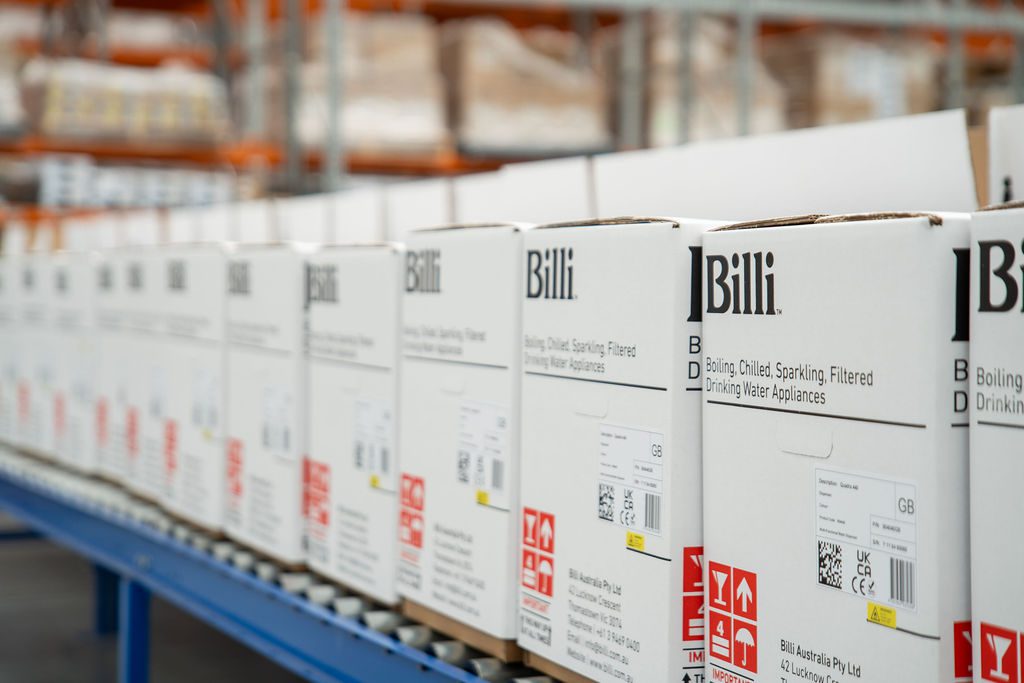
“We changed our polystyrene (EPS) spacers to honeycomb—a biodegradable material made from recycled paper—late last year. While we may still have a small quantity of units at Billi HQ produced prior to the break point, every step we take is designed to eliminate waste. Furthermore, Billi does not use EPE nor EPP for packaging.”
Innovation Beyond the Box Our commitment doesn’t stop at the spacers. We are constantly investing in new ways to reduce our footprint. Our team has already commenced investigating the option to move towards plant fibre pallet strapping, ensuring that even the smallest components of our delivery process align with our “Green” philosophy.
What This Means for You When you choose a Billi system, you are investing in a brand that values the planet as much as you do.
- Eco-Friendly Protection: Your unit is protected by recycled, biodegradable honeycomb structures rather than non-recyclable plastics.
- Future-Proofed Compliance: While Western Australia has set the standard, we are already preparing for the New South Wales Plastic Plan 2.0, ensuring that no matter where you live, your Billi product is environmentally responsible.
- Premium Quality, Zero Compromise: While our materials are changing, our standards remain elite. Your Billi system will arrive in perfect condition, ready to provide pure, refreshing water for years to come.
We invite you to join us in celebrating this step forward. By choosing Billi, you aren’t just choosing world-class design—you’re choosing a cleaner, greener Australia.
About Billi Australia
For over 35 years, Billi has been designing and manufacturing premium instant boiling, chilled and sparkling filtered water systems in Australia. Renowned for quality, innovation, and timeless design, Billi products are specified by leading architects and designers and trusted by homeowners who demand the very best.
Media Contact:
Christy Minutoli
Marketing Manager ANZ
Royce Tan
Marketing Coordinator – Brand & Content
When you are renovating a kitchen, upgrading an apartment, or planning an office fit-out, every inclusion must justify its footprint. Cabinetry is measured to the millimetre, power points are mapped, and joinery is finalised often before appliances are specified.
That is why many designers, homeowners and facilities managers are turning to a compact underbench water systems that deliver filtered boiling and chilled water, and in selected models sparkling and ambient, from a single integrated tap.
Choosing the right system involves more than selecting a finish. Installation considerations, capacity requirements, energy performance and long-term servicing all influence whether a solution is suitable for your space. As an Australian manufacturer with more than 30 years of experience designing and producing underbench boiling and chilled systems in Melbourne, Billi approaches hydration as built-in infrastructure rather than an afterthought. Learn how to assess your options properly and specify with confidence.
Why Underbench Systems Are Replacing Traditional Taps
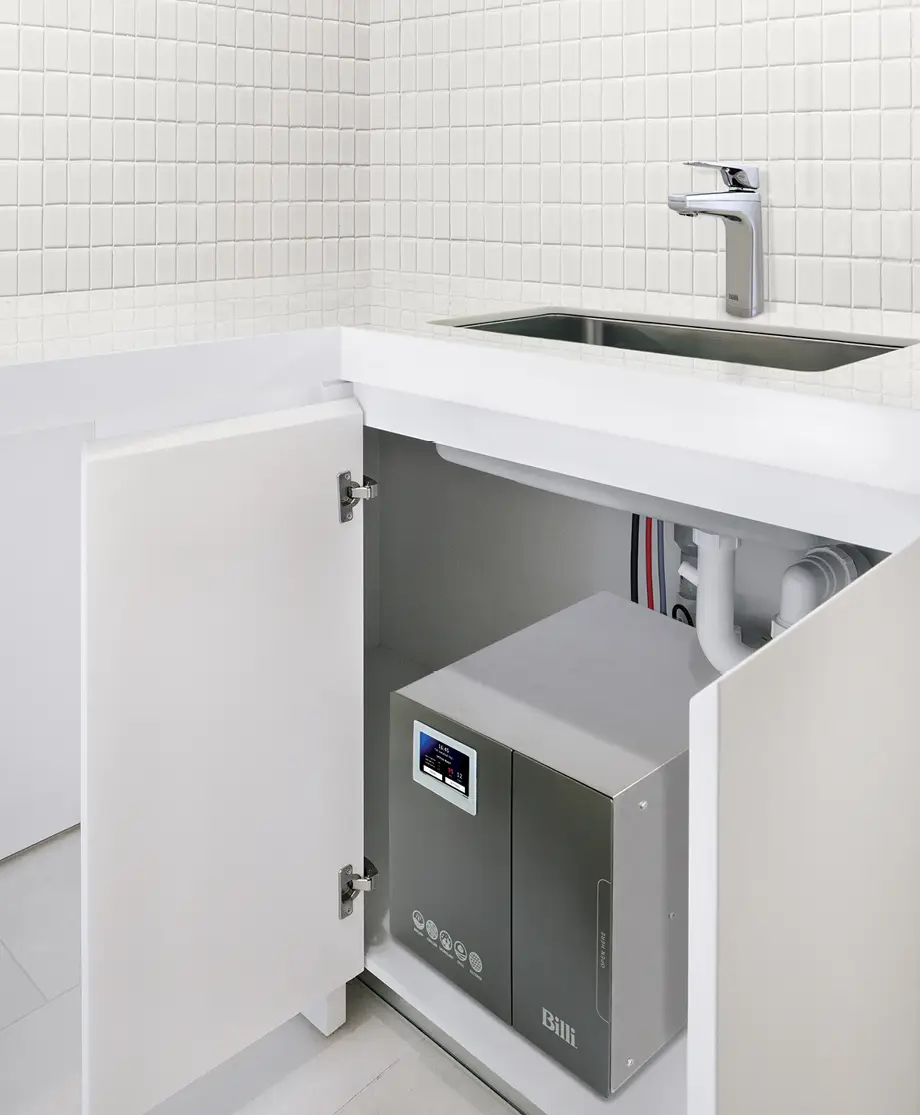
An integrated boiling and chilled tap consolidates the functions of kettles, bottled water, carbonation appliances, and more, into one streamlined solution. The unit sits beneath the bench, freeing surface area while delivering filtered water on demand.
Billi systems are engineered with a compact underbench footprint and incorporate technologies such as heat exchange and energy reclaim, where waste heat from the chilling process assists boiling. Eco and Sahara systems also feature Eco-Intelligence, a self-learning timer that adapts to usage patterns to reduce unnecessary energy consumption.
For renovation projects focused on clarity and performance, and for offices requiring reliable hydration without clutter, underbench systems provide structural efficiency rather than cosmetic change.
Confirm Space and Installation Requirements Early
Before comparing models, confirm feasibility. A well-specified retrofit filtered water tap should integrate with existing cabinetry rather than require it to be rebuilt.
However, many of our water-cooled systems do not require cupboard ventilation cut-outs or grilles, which simplifies installation and preserves joinery aesthetics. This is particularly relevant in apartment renovations and commercial retrofits where alterations can be disruptive and costly.
Typical installation considerations include:
- Adequate underbench clearance around the unit
- Accessible water stop taps
- A standard 10 amp power outlet within reach
- Installation by a suitably qualified tradesperson
Planning for these requirements from the outset avoids late-stage compromises. If you are uncertain about suitability for your space, contact our team to confirm installation requirements before finalising specification.
Align Capacity With Real-World Usage
Once installation is viable, performance becomes the defining factor. Capacity must reflect genuine demand.
In a residential setting, usage peaks tend to occur during mornings and evenings. Systems within the Billi Home range are designed for domestic environments, incorporating energy-saving modes and select models include boiling safety features suited to family use.
Commercial environments require a more deliberate calculation. A 50-person office can generate concentrated demand during breaks and meetings. The OmniOne, for example, is capable of delivering up to 180 cups of boiling water and 220 cups of chilled or sparkling water per hour, based on one cup drawn every ten seconds, and is suggested for up to 60 people.
Undersizing can lead to recovery delays and strain. Oversizing may increase costs without measurable benefit. Matching the system to the scale of your site ensures consistent delivery and long-term reliability.
For larger workplaces, review our commercial range to compare models against staffing levels and expected usage patterns.
Integrate Design and Function Seamlessly
Once performance criteria are met, attention turns to interface and aesthetics. A compact system should complement the architectural language of the space.
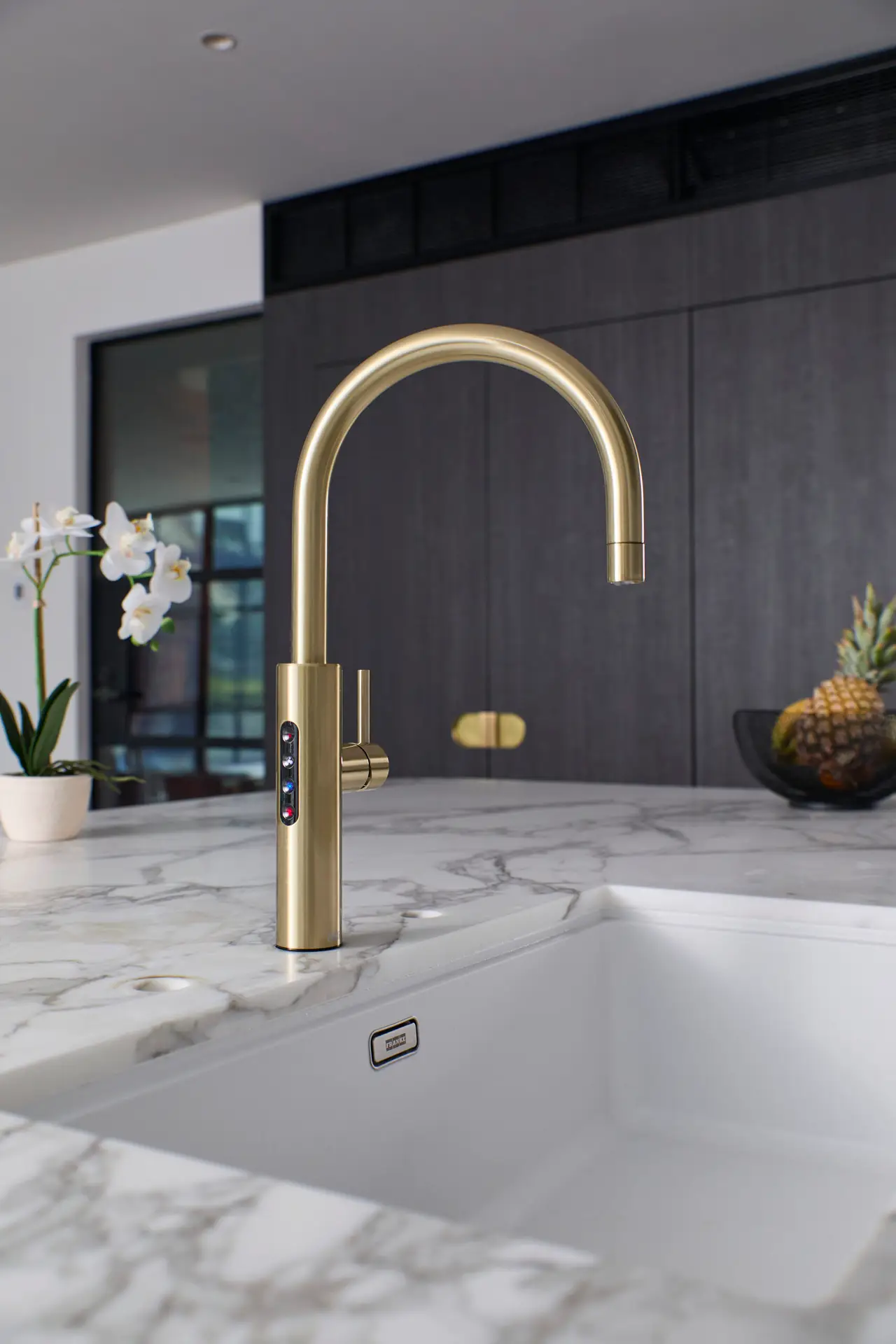
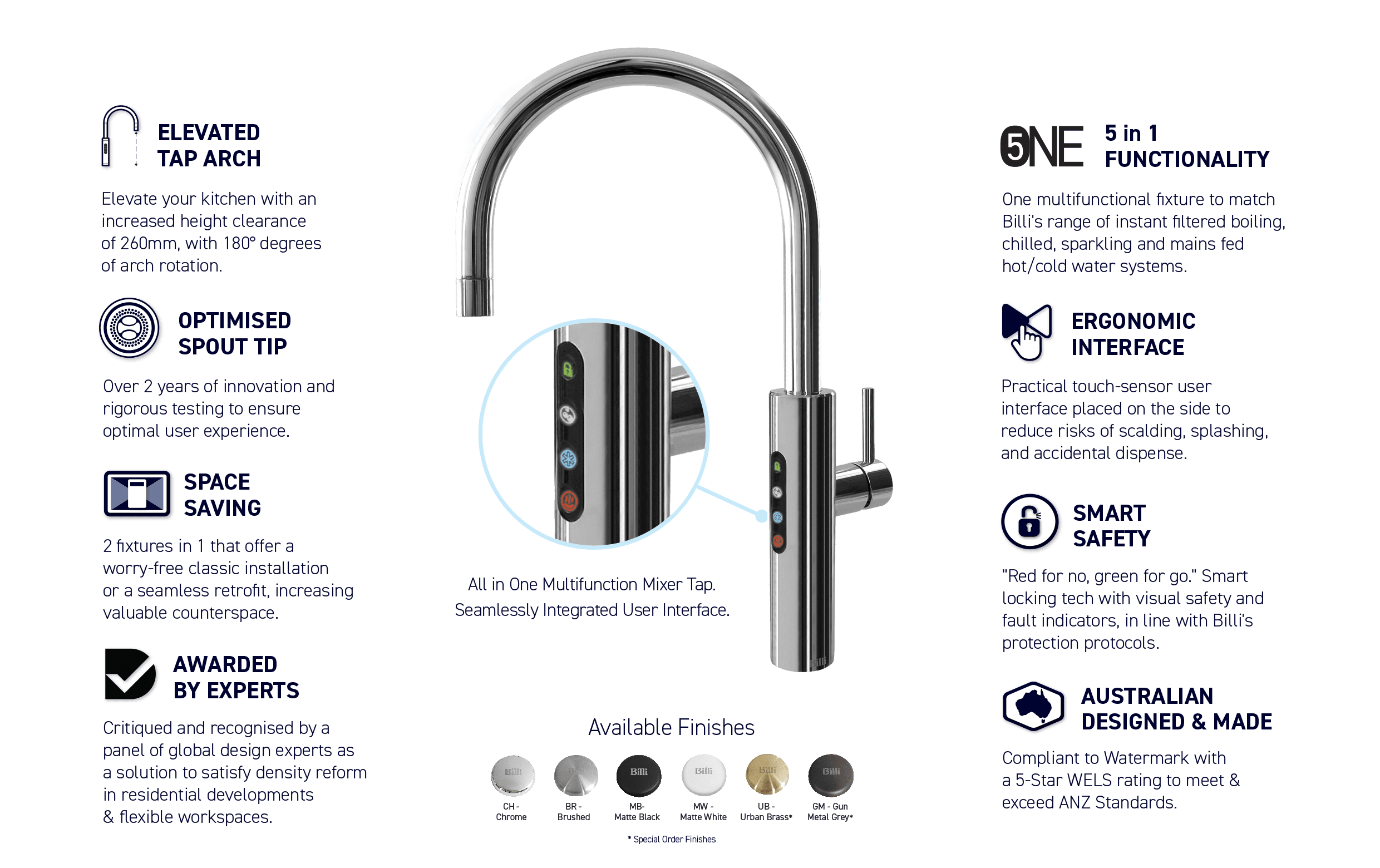
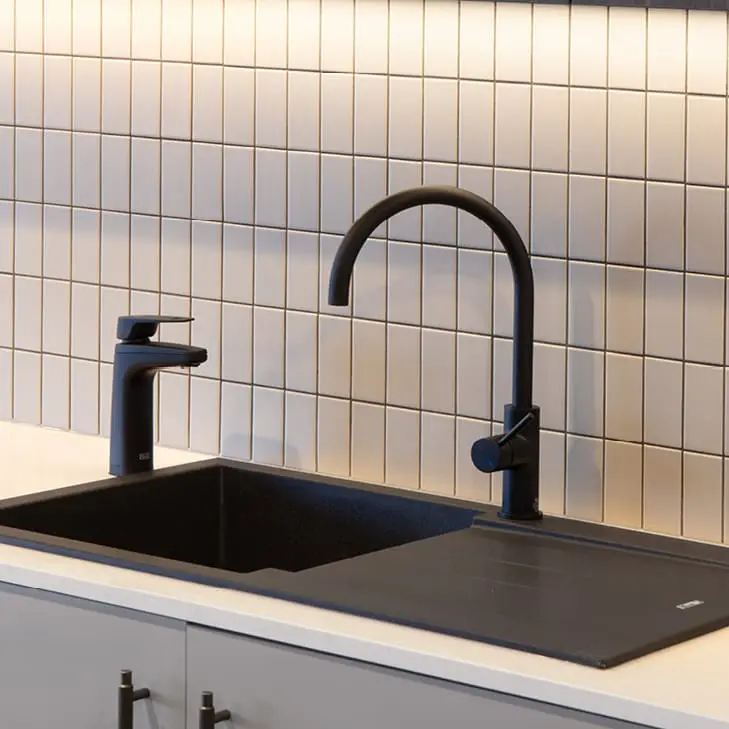
Billi offers a selection of dispenser styles including XL, XT and XR options, allowing flexibility in form and activation style. For projects seeking a single-fixture solution, the Multifunction Mixer Tap integrates filtered boiling, sparkling and chilled water alongside mains-fed hot and cold water within one streamlined tap body. The ergonomic touch interface is positioned to reduce the risk of accidental activation, and the tap complies with Australian standards including Watermark certification and a 5-Star WELS rating.
View the full range of dispensers and mixer options to select a configuration that aligns with your design intent.
Consider Energy Performance and Sustainability Credentials
Sustainable specification now forms part of both residential and commercial decision-making.
Our water-cooled systems utilise heat exchange technology to improve energy performance, and Quadra units have been certified and re-certified by Global GreenTag at Gold Level. An Environmental Product Declaration under EN 15804 further supports transparency in life cycle analysis. We also participate in the International WELL Building Institute’s Works with WELL program, aligning with broader health and wellbeing considerations in building design.
For sparkling systems, the Refillable CO? Plan (within BilliCare) offers a lower-waste alternative to disposable cylinders, with scheduled refilling provided to site.
Plan for Servicing From the Outset
A compact filtered water system should be viewed as a long-term asset. Therefore maintenance is important, and should be structured and predictable.
Filters must be replaced at least every 12 months, and commercial sites may require more frequent changes depending on usage and water conditions. Even where usage is light, filters can accumulate organic matter over time, which is why scheduled replacement is recommended.
BilliCare Service Plans provide ongoing support. The Gold Plan includes comprehensive maintenance with filter replacements performed by accredited technicians. The Silver Plan focuses on scheduled filter changes at a fixed rate. For sparkling systems, the Refillable CO? Plan ensures cylinders are replaced and refilled on a planned schedule.
This structured approach reduces downtime, ensures genuine parts are used and provides access to an Australia-wide network of trained service technicians.
Choosing With Confidence
Selecting a compact underbench water system is about determining how your kitchen or workplace will function every day.
By evaluating space constraints, confirming installation feasibility, aligning capacity with genuine demand, considering energy performance and planning for servicing, you move from preference to informed specification. The result is a system that integrates neatly beneath the bench, delivers filtered boiling and chilled water reliably and supports long-term performance through structured maintenance.
The right system supports the rhythm of daily use, consistently and quietly. View our full range to compare models or contact our experts to discuss your project.
Office kitchens influence productivity, wellbeing, sustainability, and the overall impression of your workplace. When kettles create ques, bottled water contracts feel excessive, or ageing chillers become unreliable, the conversation shifts from convenience to infrastructure.
A well-specified underbench filtered water system can consolidate boiling, chilled, sparkling and filtered ambient water into one streamlined solution. But not every system delivers the same operational performance, acoustic suitability or lifecycle value.
With over 30 years designing and manufacturing instant filtered boiling and chilled systems in Melbourne, Billi understands what separates a short-term upgrade from a long-term workplace asset. Learn about the practical criteria that determine whether a multi-function dispenser is worth the investment, from capacity and quiet operation, to sustainability credentials and total cost of ownership.
Modern workplaces demand more than a kettle
Most offices begin with a simple arrangement of a kettle and a refrigerator. Perhaps bottled water is delivered weekly. It works in the short term, until it creates friction.
Kettles introduce wait times during peak periods. Bottled water generates recurring cost and waste. Multiple standalone appliances consume space, energy and maintenance attention. None of them are integrated into the broader design of the workplace.
Hydration has become part of the amenity conversation. Staff often expect instant access to boiling and chilled water. Sustainability targets encourage a reduction in single-use plastics. Fit-out decisions increasingly prioritise efficiency and long-term performance.
Billi systems were developed around this shift. Designed and manufactured in Australia, they deliver instant filtered boiling, chilled, sparkling and still water from a compact underbench unit. The result is consolidation, with fewer appliances, less clutter, and greater control.
What actually makes a system worth the investment
A multi-function dispenser should not be evaluated as a decorative upgrade. It should be assessed as workplace infrastructure.
Before comparing models, define the criteria that matter to your organisation:
- Integration of boiling, chilled, sparkling and ambient water
- Capacity to handle peak demand
- Acoustic impact in open-plan environments
- Installation requirements and joinery implications
- Energy efficiency features
- Servicing structure and predictability of maintenance costs
Framing the decision this way shifts the focus from initial outlay to lifecycle value.
Integration and underbench efficiency
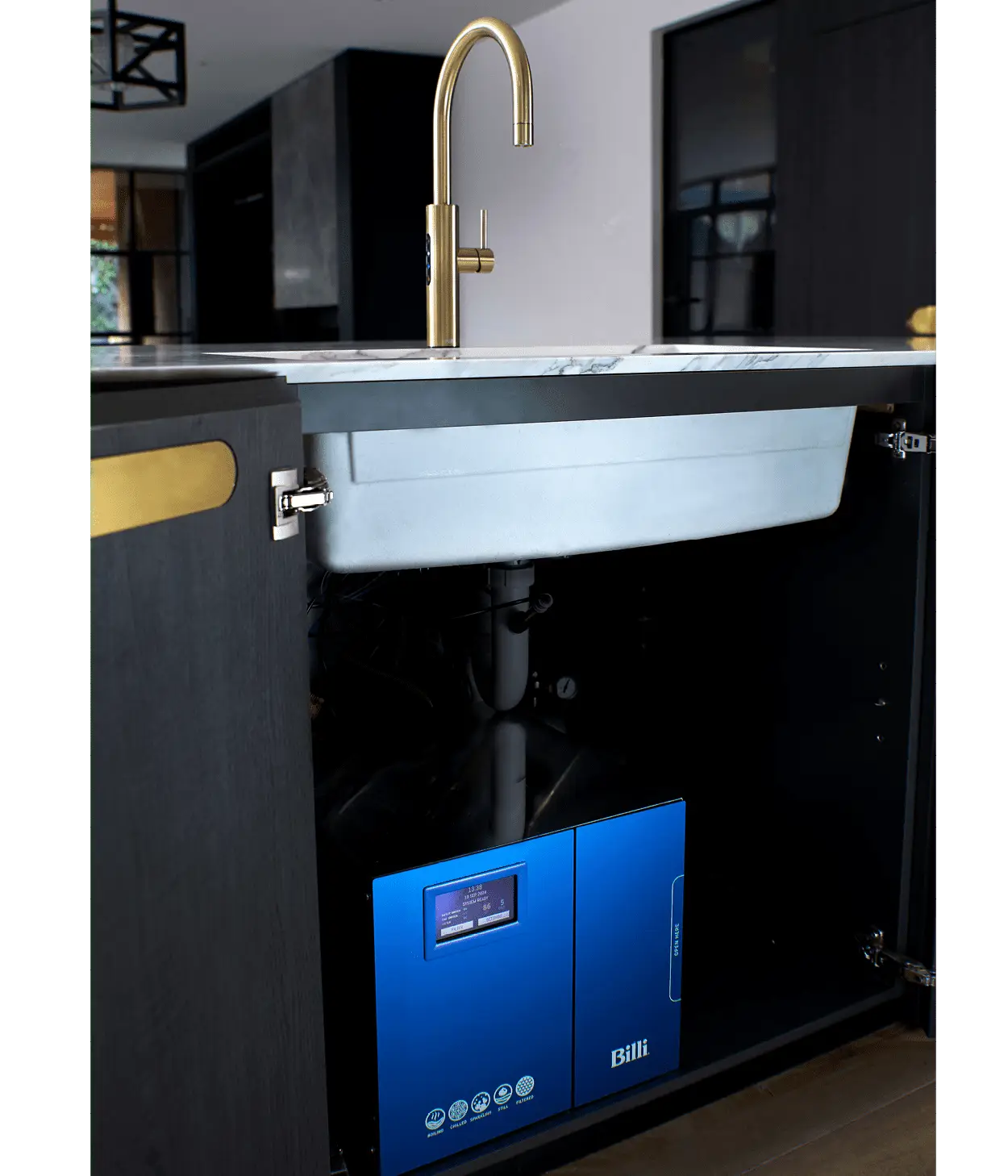
Integration reduces operational complexity. Instead of separate kettles, chillers and carbonators, an integrated system delivers multiple water types from one underbench unit.
Billi systems are engineered with a space-saving underbench footprint, allowing you to reclaim benchtop area and simplify kitchen layouts. In high-traffic office environments, that space matters.
Safety and usability are built in. Boiling dispensers include a safety switch to lock off access where required. Electronically controlled boiling flow briefly moderates delivery as water enters the cup to minimise splashing. These practical design elements reduce daily friction in shared environments.
If you are comparing configurations, you can explore suitable options within our commercial range to align specification with staff numbers and usage patterns.
Matching performance to workplace demand
Performance should be assessed realistically. A system that performs well in a small office may not suit a high-demand breakout zone.
Sparkling capability, where required, should also be considered carefully. An instant sparkling water dispenser can integrate carbonation within the same underbench unit. Adjustable sparkling levels, with control up to 5 bar of CO? pressure, allow workplaces to tailor output to preference. Ice bank technology supports consistent chilled and sparkling delivery.
For organisations aiming to reduce bottled sparkling purchases, the Silver Sparkling Plan (within BilliCare) offers an environmentally conscious alternative. Cylinders are exchanged and refilled, with capacity of more than twice that of some disposable options.
Not every workplace requires sparkling. But where client experience, staff amenity or sustainability goals are priorities, integrated sparkling can reduce reliance on packaged beverages while maintaining convenience.
To review available configurations, you can compare sparkling water systems such as the Eco Sparkling & Quadra Sparkling (boiling, chilled and sparkling), or Alpine Sparkling (chilled & sparkling), or OmniOne (boiling, sparkling, chilled, and still), to determine whether the function aligns with your operational needs.
Quiet operation and seamless installation
Noise is often overlooked until after installation. In open-plan offices, even modest mechanical sound can become disruptive.
Billi offers both water-cooled and air-cooled systems. Water-cooled models use heat exchange technology and do not require a cooling fan or cupboard ventilation. This reduces ambient noise and removes the need for cabinet cut-outs or grilles in many installations.
Air-cooled systems remain appropriate in certain settings, but where acoustic comfort and clean joinery are priorities, water-cooled solutions offer practical advantages.
Correct specification is essential. Contact our experts to ensure the selected system aligns with your space, usage patterns and installation constraints.
Cost measured over time
The most significant difference between entry-level and investment-grade systems emerges over years, not months. This is where total cost of ownership becomes decisive.
Energy efficiency is central. Our heat exchange technology recovers waste heat from the chilling process to preheat boiling water, improving efficiency and supporting energy savings. Standby mode powers the unit down after two hours of non-use to reduce unnecessary consumption. Eco and Sahara models incorporate Eco-Intelligence technology, a self-learning timer that monitors usage patterns and adjusts operation to minimise energy consumption.
Maintenance must also be predictable. Filters are consumable items and must be replaced regularly, with commercial sites typically changing filters at least every six months depending on usage and water quality. Structured service plans simplify asset management. The BilliCare Gold Plan includes comprehensive maintenance and filter replacements performed by accredited technicians at a fixed fee. The Silver Plan provides scheduled filter replacement at a consistent rate.
With correct specification and regular servicing, there is no reason a Billi unit will not operate for many years. Longevity shifts the financial equation significantly.
Sustainability credentials that support modern fit-outs
Billi Quadra units have been repeatedly certified by Global GreenTag at Gold Level under the LCARate Program and hold an Environmental Product Declaration under EPD EN 15804. We also maintain membership with the International WELL Building Institute and participate in initiatives aligned with WELL standards.
For architects and facilities managers working toward Green Star, WELL or ESG objectives, documented credentials provide assurance. Reducing bottled water reliance, selecting energy-efficient systems and specifying Australian-designed and manufactured products all support more responsible fit-out decisions.
Common concerns and practical answers
Budget is often the first hesitation. A multi-function system represents a capital investment. However, when evaluated over its operating lifespan, including energy performance, servicing structure and reduced appliance duplication, the value proposition becomes clearer.
Some workplaces question whether sparkling is necessary. In smaller environments it may not be. In larger offices or client-facing spaces, it can reduce bottled purchases and elevate amenity without adding complexity.
Maintenance is another concern. BilliCare plans exist to reduce downtime and simplify servicing, with accredited technicians performing scheduled maintenance. Warranty conditions are clearly defined for commercial installations, and consumables such as filters are treated as standard replacement items.
Noise and installation disruption can be managed through correct model selection, particularly where water-cooled systems eliminate the need for ventilation cut-outs.
The most important decision is not whether to upgrade, but how to specify correctly.
Choosing with confidence
When you assess integration, performance, acoustic suitability, sustainability credentials and total cost of ownership together, the decision becomes more strategic. A well-specified system reduces clutter, improves efficiency, supports environmental objectives and provides predictable servicing over the long term.
If you are reviewing your options, explore our commercial range to compare models suited to your environment. For tailored specification advice, contact our experts. And to ensure continued performance from an existing unit, book a service through BilliCare.
When hydration is integrated into your workplace infrastructure, the investment supports efficiency, sustainability and long-term operational confidence.
In a busy office kitchen, boiling water is a frequent occurence. Staff move quickly between morning coffees and tea, and often share the same urgency. In that environment, speed matters, but so do safety and hygiene.
This is where the difference between a standard tap and a premium boiling water tap becomes clear. In this case, premium means instant access to boiling water, engineered for shared workplaces, designed to manage risk, simplify maintenance and perform consistently.
With more than 30 years designing and manufacturing instant filtered boiling and chilled water systems in Australia, Billi understands what commercial environments demand. If you are reviewing options for your workplace, understand what matters.
Why Offices Are Moving Beyond Basic Setups
A kettle may suit a small team, but in larger offices it introduces friction. Staff wait while water is boiled and benchtops become crowded. There is little control over flow or activation.
An effective office filtered water system should remove those inefficiencies while supporting safe, repeat use. Instant access to boiling water changes the rhythm of the space. It allows controlled delivery without open steam or repeated handling of separate appliances.
Billi systems are built for shared use. That means consistent temperature delivery, deliberate safety mechanisms and an underbench design that integrates neatly into the kitchen rather than cluttering it.
Premium Means Safer and Smarter in Shared Spaces
In commercial environments, premium should translate into measurable operational benefits.
At a minimum, look for:
- Electronically controlled boiling water flow
- A lock-off or childproof safety function
- Automatic reversion to safety mode after non-use
- Energy-saving standby capability
- A compact underbench footprint
Billi dispensers offering boiling water are supplied with a safety switch to lock off access where required. A lock icon indicates when it is engaged, and the unit reverts to safety mode after a period of non-use. These features are practical responses to the realities of shared workplaces where multiple users access the same system throughout the day.
Anti-Splash Boiling Water and Controlled Delivery
Boiling water carries inherent risk. The objective is to manage that risk through controlled engineering.
Our splash-free boiling water delivery electronically varies the flow rate, slowing momentarily as water first enters the cup to reduce splashing.
Additional safety features include:
- Childproof safety switch
- Boiling water safety isolation mode
- Dispenser surfaces designed to remain cool to touch
When assessing a safe boiling water tap, examine how it controls the initial release of water and how easily access can be restricted in shared or supervised environments.
Touchless and Low Contact Activation for Workplace Hygiene
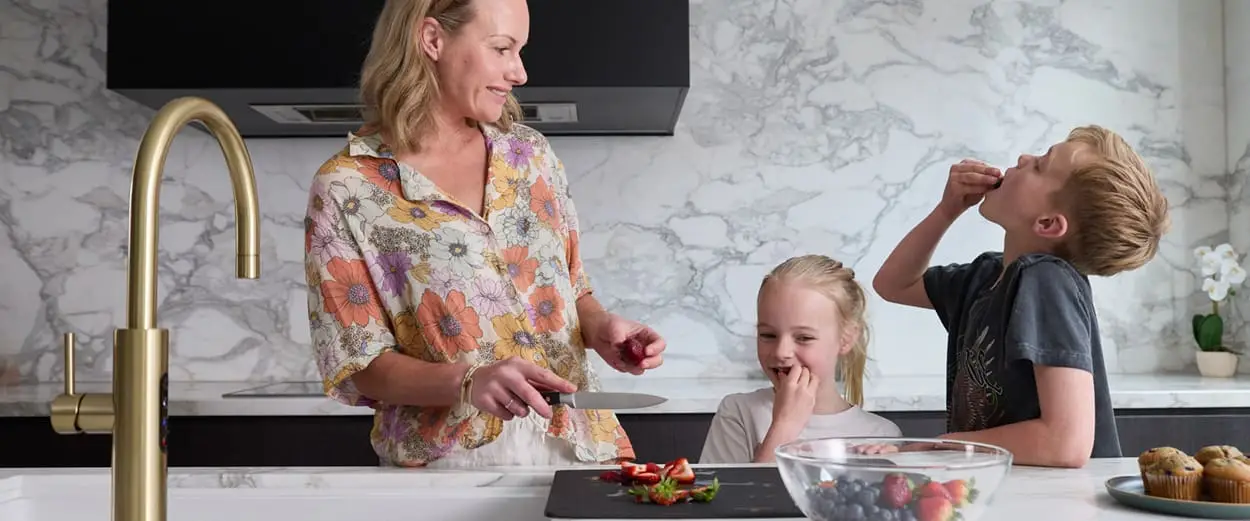
Shared office kitchens are high-contact environments. When multiple people use the same fixtures throughout the day, reducing unnecessary touchpoints becomes an important part of maintaining workplace hygiene.
Billi’s Multifunction Mixer Tap already supports low-contact interaction with a practical touch-sensor interface positioned to the side of the dispenser. This placement helps reduce risks of splashing, scalding and accidental dispensing while keeping operation intuitive for everyday use.
We are also preparing to introduce a new touchless option with the upcoming XT Emotions dispenser. Designed for modern workplaces where hygiene and user experience are both priorities, XT Emotions will allow touch-free activation while maintaining the controlled delivery expected from a premium boiling water system.
As with any shared appliance, the best touchless design balances hygiene with usability. Overly sensitive sensors or complicated controls can frustrate users. The aim is simple, deliberate activation that suits busy environments where many different people interact with the system each day.
For healthcare settings, education facilities and high-traffic corporate offices, touchless or low-contact activation is increasingly viewed as a practical upgrade rather than an optional feature.
Underbench Design That Simplifies Installation
Premium systems should integrate cleanly into existing cabinetry.
Our water-cooled systems do not require cupboard ventilation cut-outs or grilles. This preserves storage space and avoids unnecessary modifications to joinery.
Water-cooled options also operate quieter than traditional air-cooled systems. In open-plan environments, that quieter operation supports a more comfortable workspace.
An underbench boiling water system should be compact, efficient and straightforward to accommodate within standard commercial fit-outs.
Servicing That Protects Performance
A premium system must maintain its performance over time.
Instant filtered drinking water systems require maintenance and filter replacements to ensure consistent operation. BilliCare service plans are designed to simplify that process.
The Gold Plan provides comprehensive maintenance including filter replacements, with work performed by accredited technicians and parts and labour covered. The Silver Plan focuses on scheduled filter changes at a fixed rate. For sparkling systems, a Refillable CO? Plan provides an environmentally conscious refill service.
For facilities managers overseeing multiple assets, predictable servicing reduces unexpected downtime and protects long-term reliability. You can book a service online.
Energy Efficiency and Sustainability Credentials
Operational performance increasingly sits alongside sustainability expectations.
Our heat exchange technology recovers waste heat from the chilling process to preheat boiling water, supporting efficient operation. Systems also feature standby mode, powering down after periods of non-use to conserve energy.
Beyond system design, the Billi Quadra has been certified by Global GreenTag at Gold Level and hold an Environmental Product Declaration under EPD EN 15804. We also participate in the IWBI Works with WELL program which reflects alignment with healthier building principles.
For organisations working towards ESG targets or WELL-aligned fit-outs, these credentials provide documented assurance rather than broad environmental claims.
Common Questions from Facilities Managers
Is a kettle cheaper?
Upfront, yes. In high-use workplaces, however, kettles introduce waiting time, repeated boiling and open steam. Premium systems focus on controlled delivery and shared-space suitability.
Are boiling water taps safe in offices?
Safety depends on design. Features such as electronically controlled splash-free flow, lock-off switches and automatic reversion to safety mode are intended specifically for shared environments.
Will maintenance be complicated?
With structured service plans and accredited technicians, maintenance can be scheduled and predictable.
Choosing the Right System for Your Workplace
Start with usage patterns. How many staff are likely to draw boiling water at peak times. Do you also require chilled or sparkling options? Would integration with hot and cold supply simplify the layout?
Our range includes boiling, chilled, sparkling and still filtered water systems, with multiple dispenser designs to suit different commercial environments. For tailored advice based on your workplace size and fit-out requirements, contact our experts.
Create an Efficient Workplace
Selecting a premium boiling water tap is about specifying a system that manages risk, supports hygiene, integrates cleanly into your cabinetry, and remains reliable through structured servicing.
When those elements align, the tap becomes infrastructure. It protects staff, supports consistent operation and reflects your organisation’s standards.
Explore our commercial range or enquire online to create a more efficient workplace.
Clean, great-tasting water shouldn’t come with a maintenance headache. Whether you’re refilling your bottle at the office or making tea at home, your water system is a daily habit. But when it’s time to change the filter, it shouldn’t become a production.
Many people associate filter replacement with tools, tight cabinetry or waiting around for a technician. Billi believe that maintaining your water system should be as seamless as using it. That’s why every part of the experience, from our quick-change cartridges to our accessible underbench housings, is designed for speed, ease and independence.
Learn how our customer-first engineering supports DIY filter replacement, minimises downtime and helps you maintain high-performance filtration, whether you’re at home or at work.
Why filter maintenance shouldn’t be a chore
Water filters don’t last forever. Even with low usage, we recommend a cartridge change at least every 12 months. Over time, filters become saturated with the particles they’re designed to reduce, including sediment, chlorine, taste and odour, and in some cases, cysts. Even if your water still flows, performance will decline.
Unfortunately, other filtration systems can make this simple task unnecessarily difficult. You might need tools, have to reach into tight cabinetry, or perhaps even book a technician each time. It’s why people delay or forget to change their filter. But we don’t think you should have to choose between quality water and convenience.
What makes Billi filter changes so easy
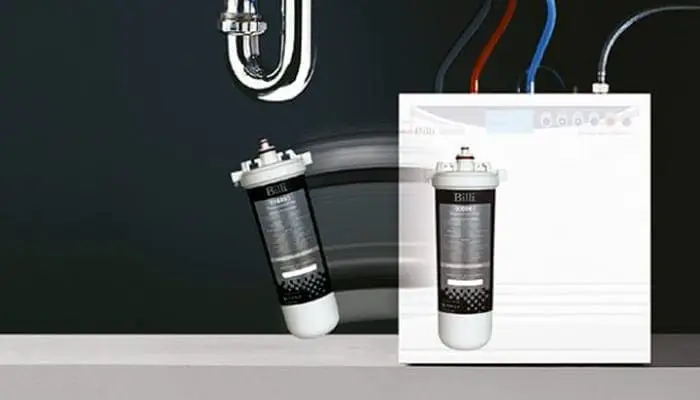
Instructions for changing the filter on your Billi unit can be found in your user manual, and a copy is also included with every new filter purchase. You can also view our How To videos. To change the filter, turn off the water supply.
- For Billi Home BCS units, select Change Filter in the system settings.
- For other Billi models, press the filter?release button located on the side of the unit.
Filter changes are a feature built into every model, from compact residential units to high-capacity commercial systems. Most users can complete a filter change in under two minutes. That means no downtime, no disruption and no hesitation.
View our how to videos to see how simple changing a Billi filter is.
You can DIY, but you’re never on your own
Confidence is key with any DIY task. That’s why every Billi system comes with technical documents, which is also supported by online guides, how-to videos and support from our national network.
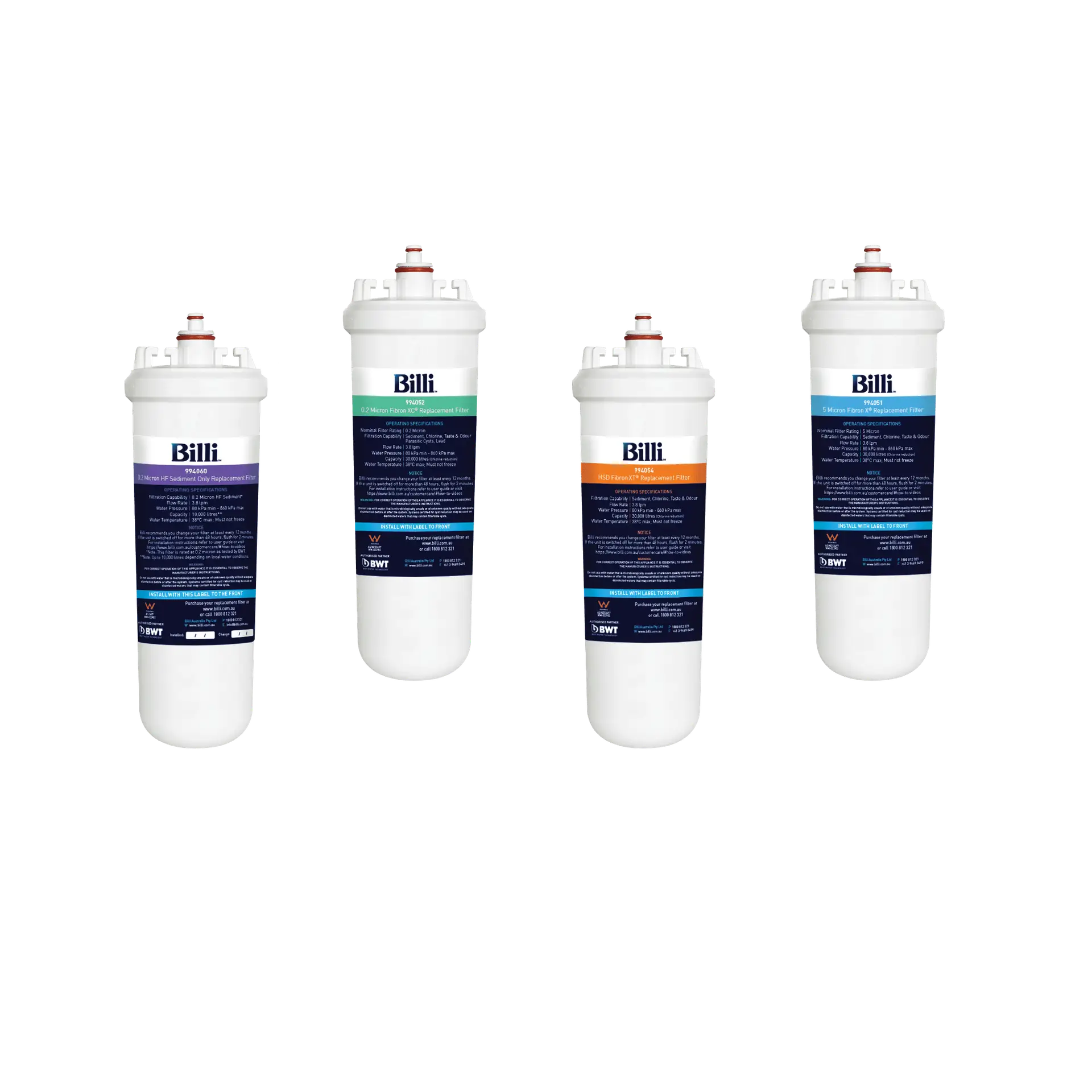
Want to stay ahead? Keep a spare cartridge on hand to avoid last-minute orders or maintenance delays. You’ll find all compatible models in our online shop.
Spend less time servicing
When your water system works this effortlessly, it’s easy to forget it needs a little care. But now you know with Billi, changing your filter is no longer a task to dread.
From twist-and-lock cartridges to supportive service plans, everything is designed to help you maintain performance without the drama. Whether you’re running a busy workplace or looking after your household, a quick filter change is all it takes to keep things flowing.
View our range or visit your local Billi stockist.
In commercial washrooms, healthcare facilities, and schools, hygiene expectations have never been higher. Since the pandemic, even routine handwashing has become an area of focus for building designers, facility managers and compliance officers. Every high-touch point is a potential hygiene risk, and this more apparent in shared washroom settings.
Sensor-activated taps and touch-free soap dispensers offer an effective solution. By reducing the need for physical contact, they help reduce cross-contamination and support higher hygiene standards in the spaces where it’s most critical. Billi’s sensor tap and soap dispenser range is setting the benchmark for reliable, contactless handwashing across industries.
Hygiene in shared washrooms requires a smarter approach
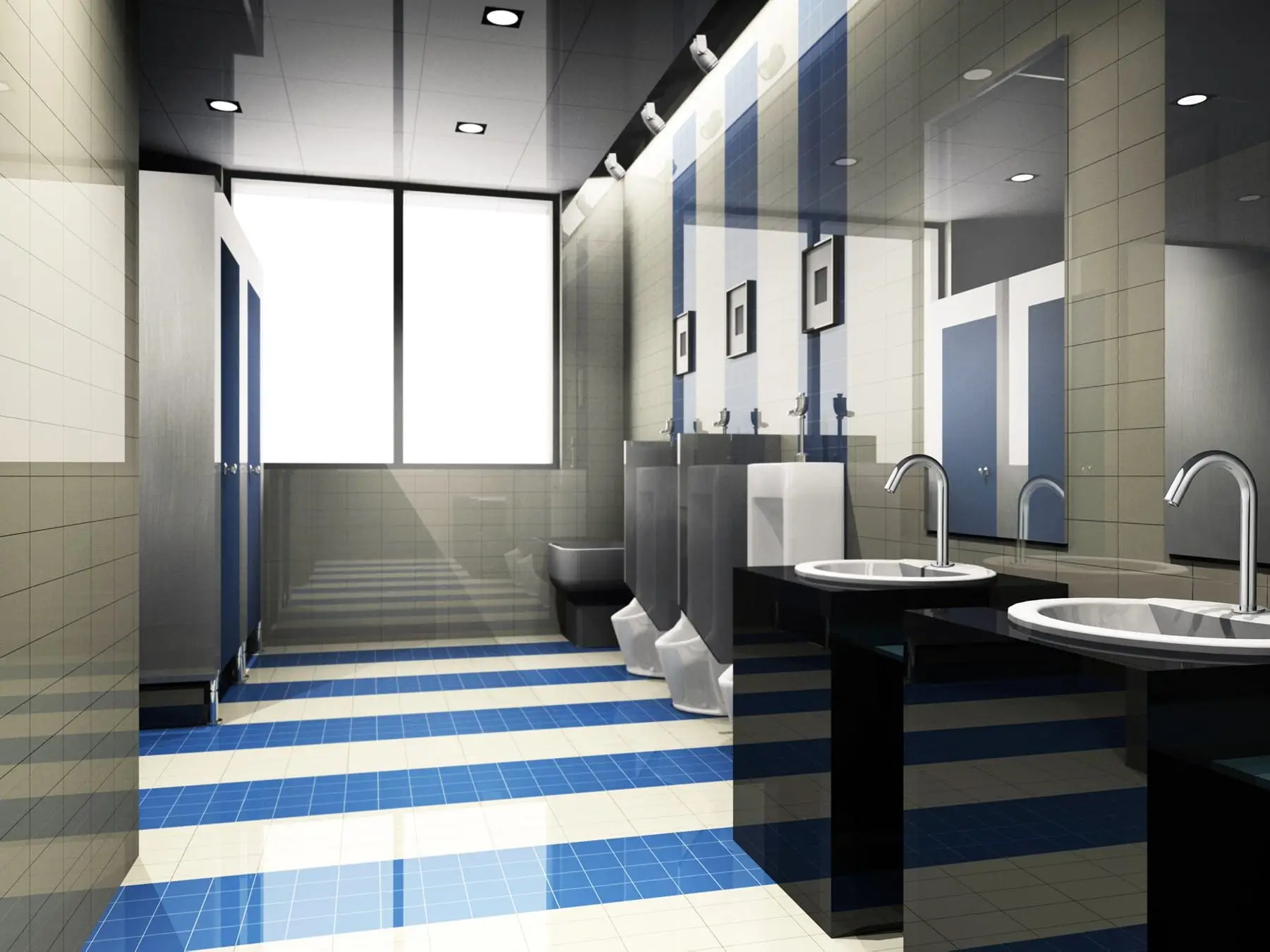
Washrooms are high-frequency zones. In public buildings, aged care centres, food prep areas, and education facilities, multiple users interact with taps and soap dispensers within short windows of time. Traditional fittings that rely on levers or buttons become hotbeds for microbial spread and surface-level contamination.
As awareness around hygiene continues to shape public and commercial expectations, touch-free water dispensing is fast becoming the standard. Safe, intuitive, and universally accessible, our sensor-activated washroom range addresses both functional and compliance requirements.
How sensor taps and soap dispensers from Billi work
Our washroom solutions are designed with precision and ease in mind. Each sensor tap and sensor soap dispenser is equipped with a discreet, built-in electronic sensor that activates when hands enter the dispensing zone, no need to touch a thing. The range includes:
- Bench Mount Sensor Taps – ideal for modern bathroom vanities and accessible handwashing stations
- Straight Wall Mount Sensor Taps – clean lines, compact design, and suitable for retrofit installations
- Wall Mount Sensor Taps – perfect for commercial or minimalist design requirements
Complementary sensor soap dispensers are available in matching configurations, each with a 1000ml capacity and powered by either mains or battery for flexible installation.
These products are ideal for healthcare, aged care, childcare, schools, universities, commercial buildings, and food-handling environments where hand hygiene is a compliance priority.
Designed for compliance and comfort
Every Billi washroom product is created for intuitive use and lasting performance. With quick-response activation and automatic shutoff, our sensor-activated taps support water-saving behaviours and user convenience simultaneously.
The sleek, under-spout sensor integration removes the need for visible external triggers, making cleaning easier and reducing points of grime buildup. These products are suitable for accessible bathrooms and designed to align with hygiene and safety standards in high-traffic washroom environments.
Built for demanding commercial environments
From hospitals to hospitality venues, our sensor-activated washroom systems meet the needs of users who expect fast, hygienic handwashing without fuss. Our robust build quality and dual power options make them ideal for new builds and refurbishments alike.
The touchless design also reinforces a sense of care in any facility, reassuring staff, patrons, and patients alike that health and hygiene are being prioritised.
Contact the experts at Billi for help tailoring a washroom solution to your site.